Logistics Warehouses in Nepal: A Simple Guide for Importers and Exporters
Quick answer: What are Logistics Warehouses? A logistics warehouses are facilities used to store, receive, manage and pack items ready to be sent out. Businesses in Nepal will use a...
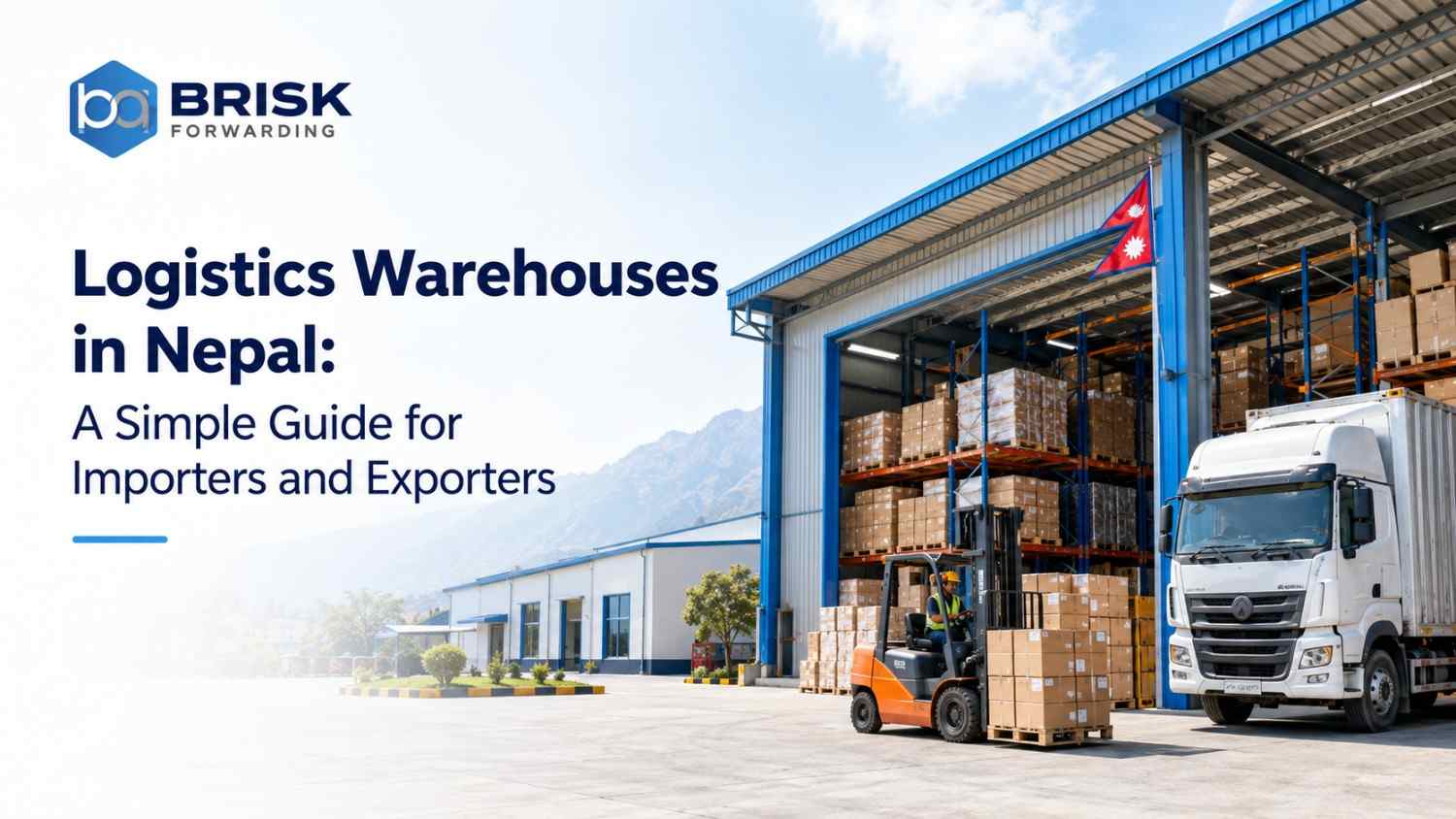
Quick answer: What are Logistics Warehouses? A logistics warehouses are facilities used to store, receive, manage and pack items ready to be sent out. Businesses in Nepal will use a logistics warehouse to store their imported items near the border (or airport), so they can be delivered to their customers on time. Choosing the correct logistics warehouse will depend on your type of cargo, amount of cargo and location of your customers.
Once you have got your items to Nepal, you then need to make sure they get to your customers on time. Many businesses lose out by having their stock stuck in the wrong place, getting held up with paperwork, running out of stock or having too much stock.
A good logistics warehouse will help to reduce this issue. Providing a secure place for your cargo to be held and gets it moving again once you’re ready.
This guide will show you how logistics warehouses work in Nepal. We’ll take you through the different types, services offered, costs and how to choose the best one for you. This has been written in easy-to-understand language so you can make an informed decision.
What Are Logistics Warehouses?
A logistics warehouse is a storage facility designed to handle goods in a supply chain. It receives goods (cargo) from a port/airport/factory, stores them and then forwards to a shop/business/home.
Whereas a basic Warehouse provides a space to store. A logistics warehouse provides a process. Usually involving:
- Receiving and inspecting your cargo.
- Storing your goods correctly.
- Keeping track of your stocks.
- Picking and packing.
- Loading and delivering.
- Dealing with returns.
Sometimes you may come across the terms logistics warehousing, distribution or warehouse distribution logistics. This can all be used interchangeably. It refers to storing goods and distributing them. It is just one part of the supply chain and will work best when well integrated with freight, custom and delivery.
Logistics Warehouses vs. Regular Storage
Many people use the words warehouse and storage as if they mean the same thing. They do not.
| Feature | Regular storage | Logistics warehouse |
| Main job | Hold goods | Hold, track, pack, and ship goods |
| Stock tracking | Often manual | Usually software-based |
| Order handling | None | Pick, pack, and dispatch |
| Links to transport | Rare | Strong |
| Customs support | None | Often available |
| Best for | Long, quiet storage | Active, fast-moving cargo |
If you only need a dry room for old stock, regular storage works. If you sell goods every week and need to ship them fast, you need a logistics warehouse.
Why Logistics Warehouses Matter in Nepal
As a landlocked country, you will need to bring any sea freight to one of the ports in India such as Kolkata. From here, it will be transported via road or rail to a border point for Nepal such as Birgunj. Air freight will mainly arrive to Tribhuvan International Airport in Kathmandu.
Due to the number of steps, there are often delays. There may be delays due to bad weather, strikes, border congestion and lack of documentation.
Having your own warehouse will allow you to;
- Allow for some buffer time: If your freight arrives early or late, then you have somewhere safe to store it until you are ready to proceed.
- Reduce any rush costs: If you did not have a warehouse, you may have to pay extra for rushing your freight via truck or additional port charges. With a warehouse, you can plan.
- Keep your stock close to your customers: Having a warehouse close to Kathmandu will mean you can get your stock to the valley quickly. Having a warehouse close to the border can also allow you to service the importers quickly as they will be moving large amounts of goods.
- Help with customs: Some warehouses allow you to keep your goods in customs until they are ready to be cleared. This can be beneficial for your cash flow.
For a wider view of how cargo moves in and out of the country, read our guide to cargo services in Nepal.
Types of Logistics Warehouses
Not every warehouse fits every business. Here are the main types you will meet.
Public Warehouses
Public warehouses are available for use by many customers. You pay for your own storage space, but there are also other businesses within the same building. This is cheaper and flexible. It is ideal for small and medium-sized businesses.
Private Warehouses
The company either owns or rents its own warehouse. The firm controls the facility and the procedure involved. However, the company is responsible for paying the costs associated with rental, staffing, and maintenance.
Bonded Warehouses
The bonded warehouse holds imported products until customs duty has been paid. Customs duty is paid at the time the products are taken out of the warehouse, and not when the products are put into the warehouse. There are different regulations for different products and for different customs offices.
Distribution Centers
The distribution warehouse is all about efficiency. The goods come in, are sorted, and go out quickly. There isn’t much stock kept around. Many retail and food companies opt for this kind.
Cold Storage Warehouses
Certain goods require cool temperatures. This could include medicines, dairy products, and fresh produce. The cold storage helps keep these items safe. It is more expensive since it requires energy and equipment.
Fulfillment Warehouses
The fulfillment warehouse is specifically designed for online orders. It packages individual packages to customers. We will discuss this type further in the following section.
What Services Do Logistics Warehouses Offer?
Good warehouse and distribution services go beyond a roof and a lock. Look for these core services.
- Receiving and inspection: Staff count and check each delivery. They note damage and report it fast.
- Storage and racking: Goods sit on pallets and shelves. This keeps them off the floor and easy to find.
- Inventory management: The warehouse tracks what comes in and what goes out. You should see your stock levels at any time.
- Pick and pack: Staff pull items for each order and pack them for shipping.
- Cross-docking: Goods move from the incoming truck to the outgoing truck with little or no storage. This saves time and cost.
- Labeling and kitting: Staff add labels, barcodes, or bundle items into sets.
- Distribution and delivery: The warehouse sends goods to shops, offices, or homes. Some also offer door-to-door delivery.
- Returns handling: Staff receive returned goods, check them, and restock or discard them.
Some providers also pair storage with freight and customs work. That saves you from managing three or four separate vendors.
What Is Third-Party Warehousing and Distribution?
Third party warehousing & distribution is where you hand over the storage and distribution of your goods to a third party. This is commonly referred to as 3PL (third party logistics).
By using a 3PL you are renting the warehouse and services. The building, staff and systems are all managed by the third party.
Benefits of 3PL warehousing:
- No cost of purchasing/leasing a site
- Pay for the space you use
- Access to trained staff and systems
- Scale during peak times
- Focus on growing your sales
Drawbacks to consider:
- Sharing control with the provider
- Bad providers could affect your brand
- May be locked into a contract
For most small to mid size businesses 3PL warehousing is a great option to start with. You can always set up your own site later on once your volumes are consistent.
Warehouse for Ecommerce and Fulfillment Warehousing Services
With online selling becoming increasingly popular in Nepal, customers expect fast delivery along with easy returns. This can cause issues for small sellers who are packing orders from a spare room.
To help solve this issue a fulfilment warehouse can be used. Stock can be sent into the warehouse once. Orders are then picked, packed and sent from the warehouse.
Good fulfilment warehouses for online sellers will:
- Pick orders quickly – Often same day
- Live stock tracking that integrates with your store
- Carefully packed
- Cash on delivery support
- Easy returns
Having a warehouse for your online business can free up hours of your week. It can also prevent errors such as selling an out-of-stock item.
See how we support online sellers on our e-commerce logistics page.
Which Industries Use Logistics Warehouses?
Many industries rely on logistics warehouses to store goods, manage stock, and prepare shipments. Each industry has different storage and handling needs.
- E-commerce: Online stores need fast order picking, secure packing, and a simple returns process. An organized warehouse helps them handle orders on time.
- Food and beverage: Food products may need dry, clean, or temperature-controlled storage. Expiry dates and stock rotation are also important. The first-expiring products should usually be shipped first.
- Pharma and healthcare: Medicines and medical supplies may require strict temperature control, safe handling, and accurate records. Proper storage helps protect product quality.
- Retail and consumer goods: Retailers need regular stock replenishment to meet customer demand. A well-managed warehouse helps keep products available and reduces delays.
- Machinery and manufacturing: Manufacturers need safe storage for raw materials, equipment, and spare parts. Suitable storage systems make heavy items easier to handle and parts easier to locate.
- Aid and relief organizations: Relief agencies need organized storage for food, medical supplies, clothing, and other essential goods. Quick access helps them respond when emergencies occur.
Key Benefits of Using a Logistics Warehouse
A well-managed logistics warehouse can improve daily operations and make supply chains easier to manage. Here are the main benefits.
- Lower operating costs: Organized storage and better stock control can reduce wasted space, unnecessary handling, and avoidable shipping expenses.
- Faster deliveries: Efficient order processing and well-planned distribution help goods reach their destinations on time.
- Better inventory control: Stock records help businesses track available goods, identify shortages, and plan restocking.
- Improved cargo safety: Secure facilities, proper handling, and suitable fire protection help reduce the risk of loss or damage. Insurance may provide additional financial protection, depending on the policy.
- Flexible storage capacity: Businesses can choose storage options that suit their current needs and adjust them as demand changes.
- Easier customs coordination: When warehousing works alongside customs clearance and freight services, businesses can coordinate documentation and cargo movement more efficiently. Actual clearance times depend on the shipment and applicable procedures.
- More time for core business activities: Outsourcing warehouse operations lets your team focus on sales, customer service, and business growth instead of managing every stage of storage and dispatch.
How to Choose the Right Logistics Warehouse
Use this checklist. Score each provider against it.
1. Check the location
Site matters. A warehouse near Kathmandu suits city delivery. One near Birgunj suits bulk imports from India. Think about where your cargo enters and where your buyers live.
2. Match the storage type
Do your goods need dry, cold, or bonded space? Do they need racking, or open floor? Make sure the site fits your cargo.
3. Review security and safety
Ask about guards, cameras, fire systems, and pest control. Ask how they handle theft or damage. Ask to see the site in person.
4. Ask about technology
Good providers use a warehouse management system, or WMS. It tracks stock in real time. You should be able to check your inventory without calling anyone.
5. Look at connections
Can the provider arrange freight, customs, and delivery too? A single partner for all steps cuts delays and finger-pointing.
6. Study the pricing
Ask for a clear price list. Check what is included and what costs extra. We cover common costs in the next section.
7. Check experience
Ask how long they have worked with goods like yours. Ask for references. A provider who knows your industry will spot problems early.
8. Test the support
How fast do they reply? Can you reach someone on a weekend? Poor support is a warning sign.
What Affects the Cost of Warehousing?
Prices vary by provider, location, and goods. These are the common cost factors:
- Space used: Often charged per pallet, per square foot, or per cubic meter.
- Storage time: Longer stays cost more.
- Handling fees: Charges for moving goods in and out.
- Special conditions: Cold storage and bonded space cost more.
- Value-added work: Labeling, kitting, and repacking carry extra fees.
- Pick and pack: Often charged per order or per item.
- Insurance: Cover for fire, theft, and damage.
- Delivery: Charged by distance and weight.
Always ask for a full quote in writing. Ask which fees are fixed and which can change. Hidden charges are the most common source of disputes.
Common Mistakes to Avoid
- Choosing on price alone: Low rates may mean poor security or limited services. Compare cost and quality.
- Ignoring contract terms: Check the fees, notice period, and liability limits before signing.
- Skipping a site visit: Inspect the warehouse for cleanliness, security, and proper storage.
- Ignoring future growth: Choose a warehouse that can handle changes in your storage needs.
- Forgetting customs: Plan storage and customs clearance together to avoid delays and extra fees.
- Keeping poor stock records: Maintain accurate inventory records to prevent errors and missing items.
Trends Shaping Logistics Warehouses
The industry is changing. Here are a few shifts to watch.
- More automation: Barcode scanners and stock software cut human error. Larger sites also use conveyors and sorting tools.
- Real-time tracking: Buyers and sellers expect to see where goods are at any time.
- Growth in online retail: More online orders mean more demand for fulfillment space.
- Focus on sustainability: Some sites now use solar power, better lighting, and less packaging waste.
- Closer links with freight: Warehouses, shippers, and customs brokers now work as one team more often. That shortens the road from port to customer.
Nepal is still early in many of these shifts. That is an opportunity. Businesses that adopt better warehousing now can gain an edge over slower rivals.
How Brisk Forwarding Can Help?
Brisk Forwarding Pvt. Ltd. is a freight forwarding and logistics company based in Gairidhara, Kathmandu. We connect storage with the rest of your supply chain.
Our warehousing and distribution service works alongside our other services:
- Air freight for urgent cargo
- Sea freight for large, heavy loads
- Road freight within Nepal and across the border
- Customs clearance and brokerage to keep goods moving
- Project cargo for oversized equipment
Because one team handles each step, there is less back and forth. You get one point of contact, clear updates, and a plan that fits your cargo. If you are new to the process, our guide to a freight forwarder in Nepal is a good place to start.
Ready to talk? Request a quote or message our team on WhatsApp at +977 985-1084758.
Final Thoughts
Logistics warehouses do more than store goods. They give your supply chain a steady base. They cut delays, lower costs, and keep your stock under control.
For businesses in Nepal, the right warehouse can fix many common problems. It can smooth out border delays, serve online buyers faster, and give you room to grow.
Start with your own needs. Know your goods, your volume, and your buyers. Then compare providers using the checklist above. Visit the site, read the contract, and ask direct questions.
Frequently Asked Questions
What is a logistics warehouse?
A logistics warehouse is a storage site that also handles stock tracking, packing, and shipping. It is one link in the supply chain, and it connects freight, customs, and delivery.
What is the difference between a warehouse and a distribution center?
A warehouse stores goods, often for long periods. A distribution center moves goods quickly. Items arrive, get sorted, and leave within days or hours. Many logistics warehouses do both jobs.
What is 3PL warehousing?
3PL stands for third-party logistics. It means an outside company stores, packs, and ships your goods. You pay for the space and services you use, instead of running your own site.
What is a bonded warehouse?
A bonded warehouse holds imported goods under customs control. You pay duty when the goods leave the warehouse. Rules vary, so check them with your customs broker.
How much does warehousing cost in Nepal?
Cost depends on space, time, handling, and special needs such as cold storage. Ask for a written quote that lists every fee. Compare at least three providers.
Do I need a warehouse for my online store?
Not at first. Small sellers can pack from home. But once you ship many orders each week, a fulfillment warehouse saves time and cuts errors.
How do I choose a warehouse in Nepal?
Check the location, storage type, security, technology, and price. Visit the site. Ask for references. Choose a provider that can also manage freight and customs.
Can a warehouse help with customs clearance?
Many can. Some warehouses work with customs brokers, which speeds up clearance. Bonded sites can also let you delay duty until goods leave. Ask your provider what they offer.
Ready to Get Started?
Contact our logistics specialists today for customized solutions, route information, and a quick quotation.