Freight Forwarder in Nepal: The Complete Guide for Importers and Exporters
Quick answer: The freight forwarder in Nepal takes care of your entire process from pickup to delivery. They can arrange transport by air, sea, or land. They prepare all the...
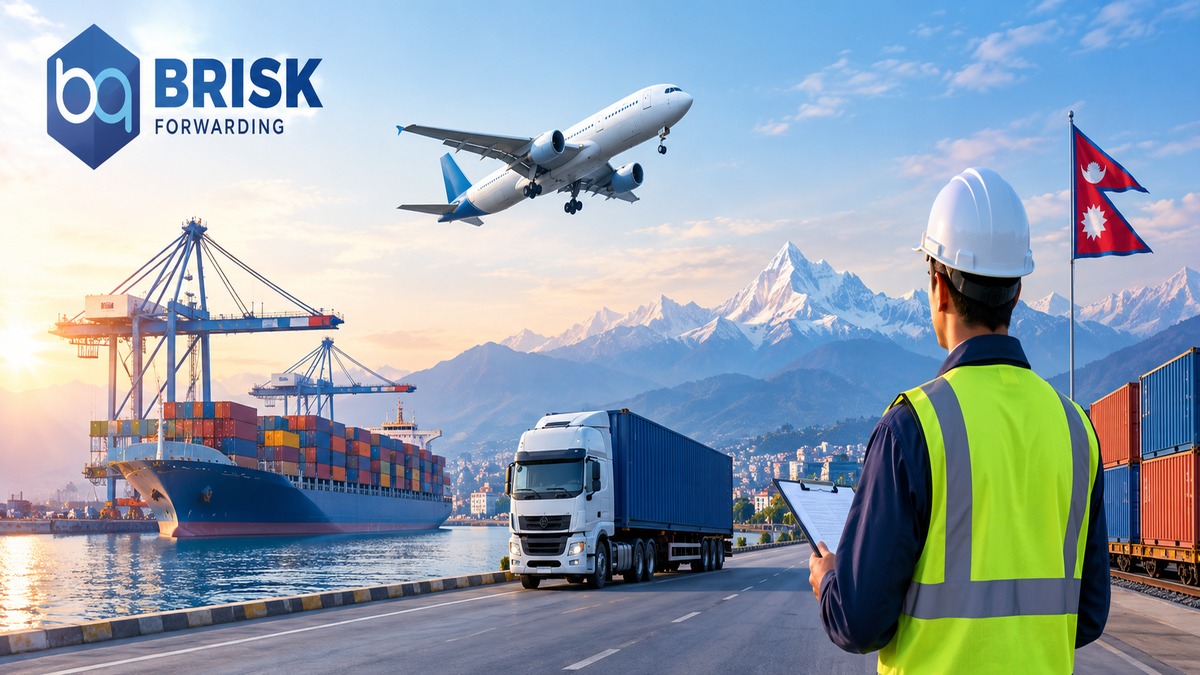
Quick answer: The freight forwarder in Nepal takes care of your entire process from pickup to delivery. They can arrange transport by air, sea, or land. They prepare all the documentation for you. They ensure that customs clearance in Nepal is done. And they track the shipment right up until the point of delivery to your client.
Nepal does not have any seaport. The goods will be transported to another nation before coming into Nepal. In such a scenario, having an ideal freight forwarder in Nepal is critical. This may determine whether your shipment arrives in time, on budget, and safely.
This guide will help you understand what a freight forwarder in Nepal does. It discusses the services offered by a freight forwarder, the routes covered, the charges levied, and the documentation process involved. This guide will also help you in choosing a suitable freight forwarding company.
Key Takeaways
- The freight forwarding company in Nepal will be responsible for all logistics, documentation, and clearance for your goods.
- Nepal does not have access to seaports as the country is landlocked; thus, sea freight to Nepal is performed via Kolkata or Haldia seaports of India.
- Air transport is the quickest method, while sea transport is the least expensive one for large volumes.
- Price will depend on weight, volume, route, cargo, and season.
- Make sure to always check license, customs knowledge, tracking, and pricing.
What Is a Freight Forwarder in Nepal?
A freight forwarder is an expert in logistics. Very few forwarding companies actually own aeroplanes, ships, and trucks. What they do is purchase space in aircraft, ships, and trucks and then mix it with expertise. Then they combine that space with planning, paperwork, and support.
Think of a travel agent, but for cargo. You say where the goods start and where they must go. The forwarder finds the best way to get them there.
A freight forwarder in Nepal is also aware of the local regulations. They know about the workings of Nepal Customs Department. They know about Tribhuvan International Airport in Kathmandu. They know about the dry ports and the border points. Such local expertise helps in saving time and making mistakes.
Freight Forwarder vs Courier vs Shipping Agent
People often mix these terms. Here is the simple difference.
|
Type |
What it does |
Best for |
|
Freight forwarder |
Plans and manages the whole shipment, including customs |
Business cargo, bulk goods, repeat shipping |
|
Courier |
Moves small parcels fast, door to door |
Documents, samples, small parcels |
|
Shipping agent |
Represents a shipping line at a port |
Vessel and container matters |
A courier is quick for a small box. A freight forwarder is better when your cargo is large, heavy, or complex.
Why Nepal Needs Strong Freight Forwarding
Nepal is located between India and China. There are no seaports in Nepal. This impacts all exports and imports.
The major seaport in Nepal is Kolkata or Haldia in India. After that, shipments are taken by road and rail transport to Nepal. Any problems with any of these steps lead to problems with the entire shipment.
Mountain ranges and weather conditions make the logistics difficult. Road closures, congested border crossings, and changing customs regulations are possible.
Good freight forwarders in Nepal identify these challenges at an earlier stage and work accordingly. This is the reason that most of the Nepalese companies prefer to use a freight forwarding company in Nepal rather than making individual bookings.
What Does a Freight Forwarder in Nepal Do?
A forwarder does much more than book space. Here are the core tasks.
- Route planning: It selects the optimal combination of air, maritime, and road transport.
- Booking: It secures the space with airlines, ships, and trucks.
- Documentation: It compiles bills of lading, packing lists, and other documents.
- Customs clearance: It lodges declarations and pays any customs duties.
- Cargo insurance: It covers your goods in case of their damage or loss.
- Packing advice: It provides recommendations on packaging delicate or heavy cargo.
- Warehousing: It keeps your goods in storage either before or after the shipment.
- Tracking: It informs you about the status of your cargo all the way through the delivery.
- Delivery: It delivers the goods to the destination.
You can use all of these services or only some. Many clients start with customs clearance in Nepal and add more later.
Main Freight Services Explained
Nepal businesses use six main services. Pick the one that fits your cargo and your deadline.
Air Freight
Air Freight is the quickest method of transporting your cargo out of Nepal. This mode of transport is ideal for urgent, expensive, and light cargo. Consider medicine, samples, clothing items, craft works, and electronics.
Most air cargo ships from Tribhuvan International Airport. The destination points include Europe, the Middle East, Asia, and others. Air freight in Nepal is relatively expensive per kilogram compared to sea cargo but saves days or weeks.
Use air cargo when time is more important than cost.
Ocean and Sea Freight
Sea freight should be considered for large shipments that are heavy and not urgent. Sea freight is the most economical mode of transport when it comes to shipping larger volumes. One can consider FCL (Full Container Load) or LCL (Less than Container Load).
In the case of Nepal, it is normally the case where the container cargo travels from sea to Kolkata or Haldia and then travels by road to Nepal.
Choose sea freight in Nepal if cost is of greater concern than speed.
Road and Overland Transport
Road freight carries goods in Nepal as well as beyond its borders. Road freight plays a vital role in trading goods with India. Moreover, road freight is also important for transporting cargo received through Indian ports.
Freight trucks transport goods to places like Birgunj, Kakarbhitta and other border locations from where they continue their journey to various destinations in Nepal.
Use road freight for regional and last-mile deliveries.
Customs Clearance and Brokerage
The shipment has to go through customs. The customs agent makes out the documentation. He or she verifies the goods, their value, and the duty payable on them. The customs declaration is then submitted to the Nepal Customs Department.
Small mistakes can lead to large delays. An incorrect code and even missing paperwork can keep your goods detained for several days. This is where a professional broker comes in handy.
A customs broker should be used for every import/export.
Warehousing and Distribution
Cargo might not be delivered directly to the customer sometimes. This may require temporary storage near the airport, port or even border. Cargo might require dividing large consignments into smaller consignments.
Warehousing ensures that your goods can be stored safely in addition to other benefits like sorting and labeling.
This is when you transport cargo in bulk but sell in smaller consignments.
Project Cargo and Heavy Lift
Some cargo is too large or heavy to use standard modes of transportation. Heavy machinery, factory equipment, and construction materials require specialized handling.
Project cargo involves conducting route surveys, using specialized vehicles, and planning time. Bridges, roads, and curves all count.
Utilize project cargo services for large or very heavy cargo.
Key Trade Routes for Nepal
Knowing the routes helps you set the right expectations.
Through India (Most Common)
Most goods imported into Nepal pass through India. The sea cargo reaches Kolkata or Haldia ports. This is transported by trucks to border crossings like Birgunj and Kakarbhitta. Birgunj is the busiest entry point of goods going to Kathmandu.
This route is well used. It also depends on Indian port, rail, and border conditions. Delays in India can delay your cargo in Nepal.
Through China
Nepal trades with China via overland route too. The places of crossing between Nepal and China include Rasuwagadhi and Tatopani. Cargo that is brought from China can even be transported through sea route to India and by air to Kathmandu.
Border status and capacity can change. Always ask your forwarder for current information before you book.
By Air
The Tribhuvan International Airport is the primary airport for handling air cargo in Nepal. Air cargo bypasses any delays caused by roads and borders.
How Long Does Shipping Take?
Transit time depends on the mode, the origin, and customs. These ranges are typical.
|
Mode |
Typical time |
|
International air freight |
3 to 5 business days |
|
Cross-border trucking |
4 to 8 days |
| Ocean freight |
18 to 35 days |
These times are estimates. Holidays, weather, and customs checks can add days. Ask your forwarder for a clear schedule before you ship.
What Affects Freight Cost?
No two quotes are the same. Several factors set the price.
- Weight/volume: Air freight charges are based on chargeable weight. Chargeable weight is whichever is higher between the actual weight and dimensional weight.
- Means of transportation: Air is expensive compared to sea. Sea is expensive for small loads compared to large ones.
- Routing/Distance: The farther the route, the higher the cost. Remote regions are expensive.
- Nature of cargo: Fragile, hazardous, and temperature-controlled cargo are expensive to handle.
- Seasonal effect: High season affects the cost positively. During festival periods, cargo space becomes booked.
- Customs duty and taxes: They depend on the commodity and its value.
- Additional services: These include insurance, storage, and packing, among others.
Ask for a quote that lists every charge. This helps you compare offers fairly. Be careful with a price that looks too low. Hidden fees may follow. A clear air cargo rate in Nepal or sea rate should always list all fees.
Documents You Usually Need
Paperwork is the top cause of delay. Prepare these early.
- Commercial Invoice: It tells the price at which the deal is being done and other conditions for the deal.
- Packing List: It is a document that lists the contents of the package along with their weight.
- Bill of Lading/Airway Bill: This is a transportation agreement and delivery slip.
- Certificate of Origin: This certificate states the origin of the product.
- Import/export permits: Sometimes certain items may require a clearance permit from a regulatory agency.
- Registration and Tax Documents: Your company should have proper registration and a PAN card.
Some goods need extra papers. Medicines, food, plants, and chemicals often have special rules. Rules and duty rates change, so confirm current requirements with the Nepal Customs Department or your customs broker.
How to Choose a Freight Forwarder in Nepal
The cheapest quote is not always the best deal. Use this checklist.
- Check registration: Is the company registered by law in Nepal?
- Ask about customs skills: Customs is where most problems occur. How do they deal with them?
- Look at the services: Do they offer air, sea, road, and warehousing services? Choosing one partner is easier.
- Test their communication: Are they prompt in responding? Are they clear in explaining things?
- Ask about tracking: You should know exactly where your cargo is located.
- Review the pricing: Make sure to get a full quotation with all costs included.
- Check insurance options: Make sure to have enough coverage for expensive items.
- Read client feedback: Search for real testimonials and ask for references.
- Check industry fit: A forwarder familiar with pharmaceuticals or machinery will be more suitable for this business.
Red Flags to Avoid
- An exceptionally low price compared to everybody else
- No office or address at all
- No estimate in writing
- Compelling you to pay for everything upfront without documentation
- Very ambiguous about customs requirements
How Working With a Freight Forwarder Works
The process is simple when the forwarder is good. Here are the usual steps.
- Request and assessment: You give information about the cargo and destination. The forwarder analyses it and prepares a proposal.
- Route planning and booking: The forwarder chooses the carrier and route for your cargo. After that, it reserves the space.
- Customs and compliance: The forwarder prepares the documentation and makes the declaration. It abides by the export/import regulations.
- Delivery and receipt: Your cargo is delivered to the destination. You receive the cargo at the terminal or your door.
Throughout the trip, you should get updates. If something goes wrong, your freight forwarder in Nepal should tell you at once and offer a fix.
Industries That Rely on Freight Forwarders in Nepal
Different goods have different needs. Here are the main sectors.
- Pharma and healthcare: Drugs require safe, clean, and at times cold shipment. Paperwork is critical.
- E-commerce: The online seller requires speedy delivery and return shipment.
- Food and beverage: Foods require speedy shipping and correct storage. Regulations regarding quality are stringent.
- Machinery and manufacturing: The heavy machinery requires specialized handling and routing.
- Retail and consumer goods: The retailer requires a constant flow of product.
- Aid and relief: The relief cargo requires speedy delivery and at times, special customs requirements.
Ask your forwarder if they have handled your type of cargo before.
Conclusion
The freight forwarder in Nepal simplifies your complicated logistics process. They handle transportation, documentation, and customs. They ensure that you don’t get delays and unnecessary costs. They provide you with a single window operation for all your processes.
To choose well, focus on customs skills, clear pricing, strong communication, and proven experience in your type of cargo. Do not choose on price alone.
Brisk Forwarding is a freight forwarder in Nepal based in Kathmandu. We offer air freight, ocean freight, road transport, customs clearance, warehousing, and project cargo. We help businesses move goods safely, on time, and with clear communication.
Ready to ship? Get a free quote or call us at +977 (1) 4004612 or 4004613. You can also message us on WhatsApp at +977 985-1084758. Visit us at Han Building, 2nd Floor, Gairidhara 2, Kathmandu.
Frequently Asked Questions
What does a freight forwarder do in Nepal?
A freight forwarder in Nepal arranges transport, prepares documents, and manages customs for your cargo. It works with airlines, shipping lines, and truckers. It also tracks your goods until they arrive.
How much does a freight forwarder in Nepal cost?
Cost depends on weight, volume, route, cargo type, and season. Air freight costs more per kilo than sea freight. Ask for a written quote that lists every fee, including customs and handling.
How do I choose the best freight forwarder in Nepal?
Check that the company is registered. Ask about customs skills, tracking, and full pricing. Read client feedback and confirm they have handled cargo like yours.
How long does it take to ship goods to or from Nepal?
Air freight usually takes 3 to 5 business days. Cross-border trucking takes about 4 to 8 days. Ocean freight takes about 18 to 35 days, depending on the origin port.
Is air freight or sea freight better for Nepal?
Air freight is better for urgent, light, or high-value goods. Sea freight is better for large, heavy, and non-urgent cargo. Many businesses use both.
Can a freight forwarder in Nepal handle customs clearance?
Yes. Many forwarders offer customs brokerage. They prepare documents, file declarations, and work with the Nepal Customs Department to clear your goods.
Do I need a freight forwarder to import goods into Nepal?
The law does not always require one. But a forwarder reduces risk. It helps with routes, paperwork, and customs, which are the hardest parts of importing.
How do I track my shipment?
Use your airway bill number or container number. Your forwarder can share tracking updates. Brisk Forwarding also offers a tracking tool on its website.
What documents do I need to ship cargo from Nepal?
You usually need a commercial invoice, a packing list, and a transport document. You may also need a certificate of origin and special permits. Requirements vary by product and destination.
Why is shipping to Nepal harder than to other countries?
Nepal is landlocked. Cargo must cross another country before it arrives. That adds steps, paperwork, and possible delays. A skilled forwarder manages these steps for you.
Ready to Get Started?
Contact our logistics specialists today for customized solutions, route information, and a quick quotation.