Machinery and Manufacturing Logistics in Nepal: Moving the Equipment That Builds a Country
Machinery and manufacturing logistics in Nepal means moving oversized, heavy, and high-value equipment safely across mountain terrain. See how Brisk Forwarding does it.
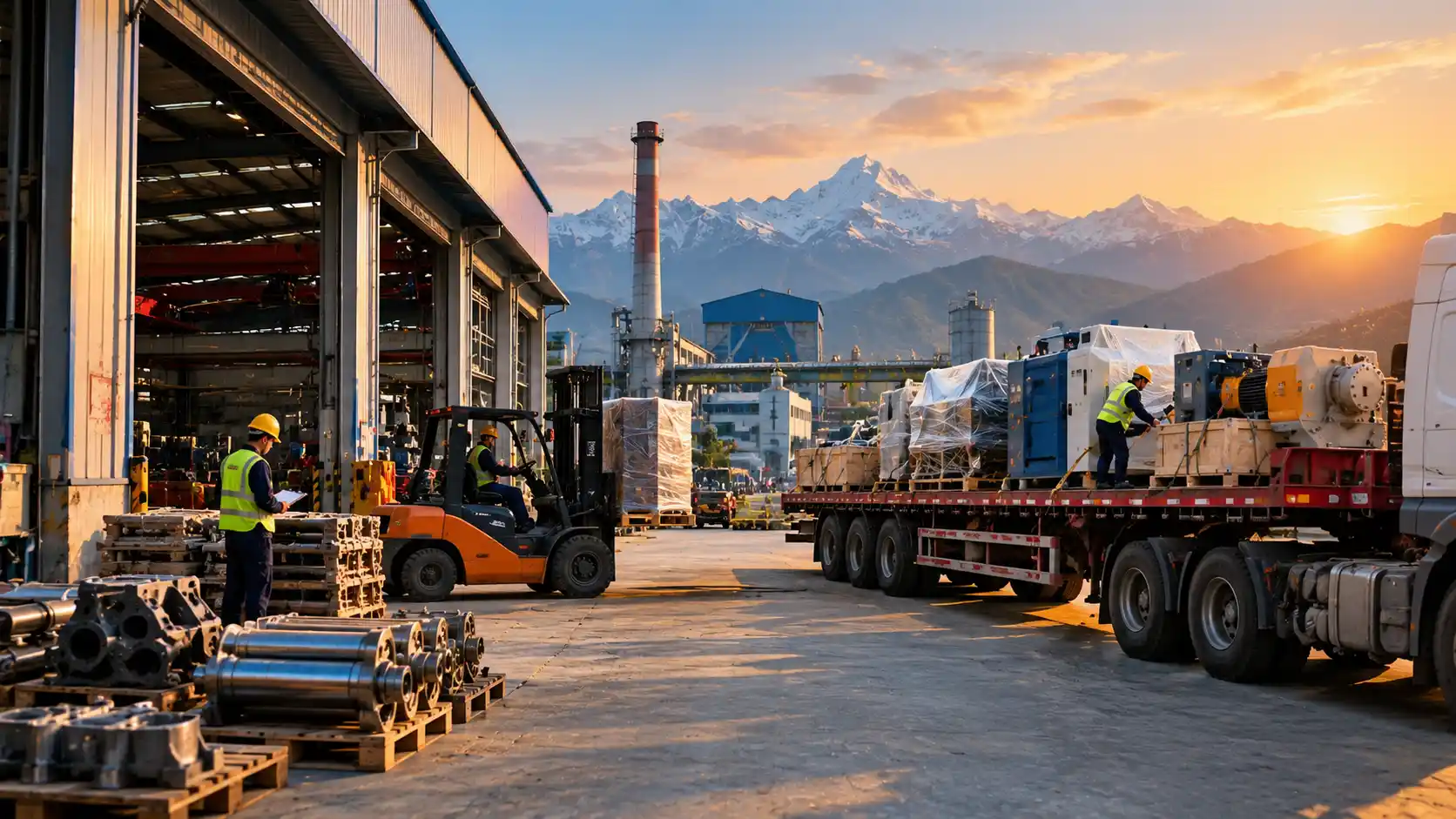
Ask yourself what actually builds a country’s infrastructure. It is not concrete or steel sitting in a warehouse. Real infrastructure comes from the excavator that digs the foundation. It also comes from the turbine spinning inside a hydropower plant. And it comes from the industrial press running on a factory floor somewhere in the Terai. None of that equipment gets built in Nepal. Nearly all of it arrives by ship, crosses a border, and climbs a mountain road to get where it needs to go. That journey is what machinery and manufacturing logistics in Nepal actually means.
This is not a category where you can treat a forty-ton excavator like a container of clothing. A road that can carry a passenger truck without issue might not hold up under an oversized load. A mountain switchback that looks fine on a map can turn into a logistical dead end once you factor in the actual turning radius of a low-bed trailer. If you develop hydropower projects, run a construction fleet, or import industrial equipment for manufacturing in Nepal, you already know this. Getting the machine to the job site is often harder than buying it.
What Counts as Machinery and Manufacturing Logistics Cargo in Nepal
This category covers a wide range of equipment, most of it heavy, oversized, or both.
- Heavy construction equipment, including excavators, bulldozers, loaders, graders, and cranes
- Hydropower equipment, including turbines, generators, transformers, and high-voltage cables
- Industrial manufacturing machinery for factories and processing plants
- Agricultural machinery, including tractors and processing equipment
- Spare parts and replacement components for existing equipment fleets
- Raw materials and structural steel used in manufacturing and construction
- Specialized equipment for mining, quarrying, and materials processing
The thread connecting all of these categories is size and consequence. A delayed excavator on a hydropower project can push an entire construction timeline back by weeks. A factory waiting on a replacement part for a broken production line loses revenue for every day that part sits at customs instead of on the floor.
Why Machinery and Manufacturing Logistics in Nepal Demands Heavy-Lift Expertise
A general freight forwarder can move a pallet of consumer goods without much difficulty. Ask that same forwarder to route a forty-ton crane through a mountain pass with a fifteen-ton bridge weight limit. You find out fast whether they actually understand this category or just think they do.
A Construction and Infrastructure Boom Driving Import Demand
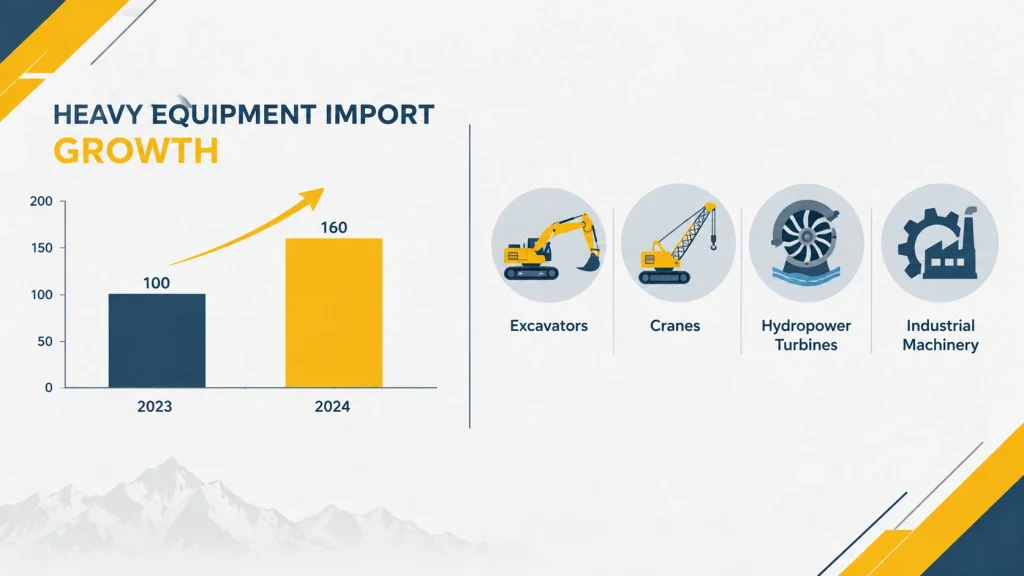
Nepal’s construction sector has been growing steadily for years, and heavy equipment imports reflect that. According to Nepal’s heavy equipment import data from the Trade and Export Promotion Centre, imports of mechanical shovels, excavators, and shovel loaders surged to nearly 19 billion rupees in one recent fiscal year. That is up from around 12.7 billion rupees the year before. Grader and leveler imports nearly doubled in the same period. Major international brands including Caterpillar, Volvo, JCB, and Sany have all established dealer networks in the country to meet this demand. That is not a slow-growing niche. It is a fast-moving import category that rewards a forwarder who actually knows how to move it.
Hydropower’s Role in Machinery and Manufacturing Logistics in Nepal
Hydropower is arguably the single biggest driver of heavy machinery imports into Nepal. Turbines, generators, and transformers destined for hydropower projects are some of the largest and most logistically complex shipments the country handles. They often require specialized route surveys before a single truck moves. A single turbine component can weigh more than an entire convoy of standard cargo trucks combined. Getting it from a port in India to a remote hill-district powerhouse site is a project in itself, not a routine delivery.
Oversized and Overweight Cargo Handling
Standard shipping containers and standard trucks are built around standard dimensions. Heavy machinery rarely fits that mold. An oversized load might need a low-bed trailer, a police escort, or temporary road clearance. Some even need a custom-built ramp just to get off a ship and onto Nepali soil. Treating this cargo like anything else is where inexperienced forwarders create expensive problems.
The Real Bottlenecks in Machinery and Manufacturing Logistics in Nepal
These are the specific points where heavy equipment and industrial machinery shipments actually run into trouble.
Border and Road Weight Restrictions
Bridges and roads throughout Nepal carry specific weight limits. A heavy machinery shipment that exceeds those limits cannot simply proceed as planned. Route surveys need to happen before shipping. Waiting until a truck gets stuck at a weight-restricted bridge is too late.
Mountain Terrain and Route Planning for Heavy Loads
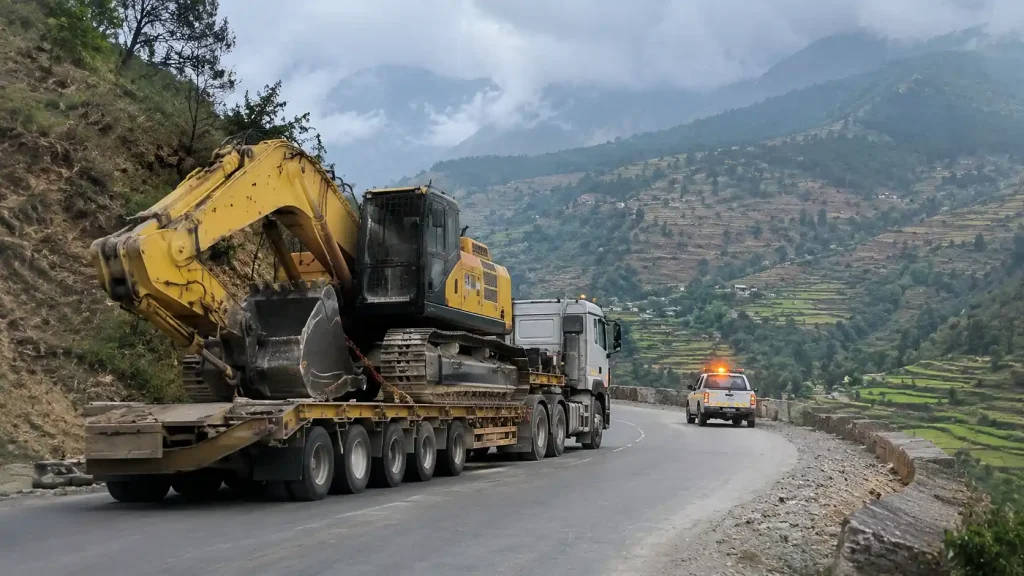
A standard truck can handle Nepal’s mountain switchbacks without much trouble. A low-bed trailer carrying an oversized load cannot always make the same turns. That route may work for one piece of equipment and be completely wrong for a taller or wider one.
Customs Valuation and Classification for Heavy Equipment
Heavy machinery and industrial equipment often involve complex customs classification and valuation questions. This is especially true for used equipment or specialized components. Getting this wrong does not just delay a shipment, it can trigger disputes that take weeks to resolve.
Spare Parts Availability and Downtime Risk
A factory or construction fleet with a broken machine is losing money every day it sits idle. Spare parts sourced from overseas manufacturers often take time to import. A logistics partner without a plan for expedited parts shipments can turn a one-day repair into a month-long production stoppage.
Limited Heavy-Lift Handling Infrastructure
Cranes, specialized loading equipment, and heavy-lift capable warehousing are not evenly distributed across Nepal. A shipment that clears customs without issue can still stall on site. Without the right equipment on the ground, nobody can unload or position it.
How Brisk Forwarding Delivers Machinery and Manufacturing Logistics in Nepal
Our process treats heavy and oversized cargo as the specialized category it is, not a larger version of standard freight.
Project Cargo and Heavy Lift Handling
Project cargo and heavy lift services for turbines, generators, construction equipment, and other oversized machinery, including route surveys and permit coordination before a shipment ever leaves the port. See our project cargo and heavy lift services for the full scope.
Customs Clearance for Industrial Equipment
Customs clearance and brokerage with direct experience in classification and valuation for heavy machinery, spare parts, and industrial equipment, so paperwork gets resolved correctly the first time. More detail is on our customs clearance and brokerage page.
Overland Transport for Oversized Loads
Overland transport planned around actual bridge weight limits, road width, and terrain, so an oversized shipment has a realistic route from the border to the job site rather than a plan that falls apart at the first mountain pass. Covered under our land and overland transport services.
Warehousing for Spare Parts and Components
Warehousing near Kathmandu for spare parts, components, and equipment awaiting deployment, so a replacement part is not starting its journey from zero the moment a machine breaks down. Details on our warehousing and distribution page.
Who Uses Machinery and Manufacturing Logistics in Nepal
This category serves a wide range of businesses building and running Nepal’s infrastructure and industry.
- Construction companies importing excavators, cranes, loaders, and other heavy equipment
- Heavy equipment dealers and distributors representing international brands
- Hydropower developers importing turbines, generators, and high-voltage transformers
- Manufacturing plants sourcing industrial machinery and production equipment
- Infrastructure contractors working on roads, bridges, and government projects
- Mining and quarry operators requiring specialized extraction and processing equipment
- Agricultural equipment importers supplying tractors and processing machinery
What to Look for in a Machinery and Manufacturing Logistics Partner in Nepal
Ask these questions before trusting a forwarder with heavy or oversized cargo.
- Do they conduct a route survey before shipping, or do they discover weight and clearance problems after the truck is already loaded?
- Can they name specific bridges or roads with known weight or width restrictions on your intended route?
- Do they have experience with customs classification for the specific type of equipment you are importing?
- What is their plan for expedited spare parts shipments if your equipment breaks down mid-project?
- Do they have access to heavy-lift handling equipment, or will that need to be arranged separately once cargo arrives?
A forwarder who cannot answer the route survey and weight restriction questions specifically has probably never actually moved an oversized load through Nepal’s mountains.
Frequently Asked Questions About Machinery and Manufacturing Logistics in Nepal
Why Does Machinery and Manufacturing Logistics in Nepal See So Much Demand?
Nepal’s construction and infrastructure sector has expanded steadily, driving sharp growth in imports of excavators, loaders, and other heavy equipment, with major international brands establishing dealer networks in the country to meet that demand.
What makes hydropower equipment logistics different from standard machinery shipments?
Hydropower components like turbines and transformers are often extremely heavy and oversized, requiring specialized route surveys, permits, and sometimes custom transport arrangements to reach powerhouse sites that are frequently located in remote hill districts.
Do heavy equipment shipments need special customs handling?
Yes. Heavy machinery and industrial equipment often involve more complex classification and valuation questions than standard cargo, particularly for used equipment, so working with a forwarder experienced in this category helps avoid disputes and delays.
How does Nepal’s terrain affect the transport of oversized machinery?
Bridge weight limits, narrow mountain roads, and tight switchback turns mean oversized loads need individual route planning rather than a generic transport plan, since a route that works for one piece of equipment may be completely unsuitable for another.
Can a Machinery and Manufacturing Logistics Partner in Nepal Also Handle Spare Parts?
Yes, and this matters more than most people expect. A logistics partner who also handles expedited spare parts shipments and maintains staging warehousing can significantly reduce downtime when equipment breaks down mid-project.
Ready to Get Started?
Contact our logistics specialists today for customized solutions, route information, and a quick quotation.