Ecommerce Logistics in Nepal: Getting Online Orders From Warehouse to Doorstep
Ecommerce logistics in Nepal means moving inventory quickly and delivering orders reliably beyond Kathmandu Valley.
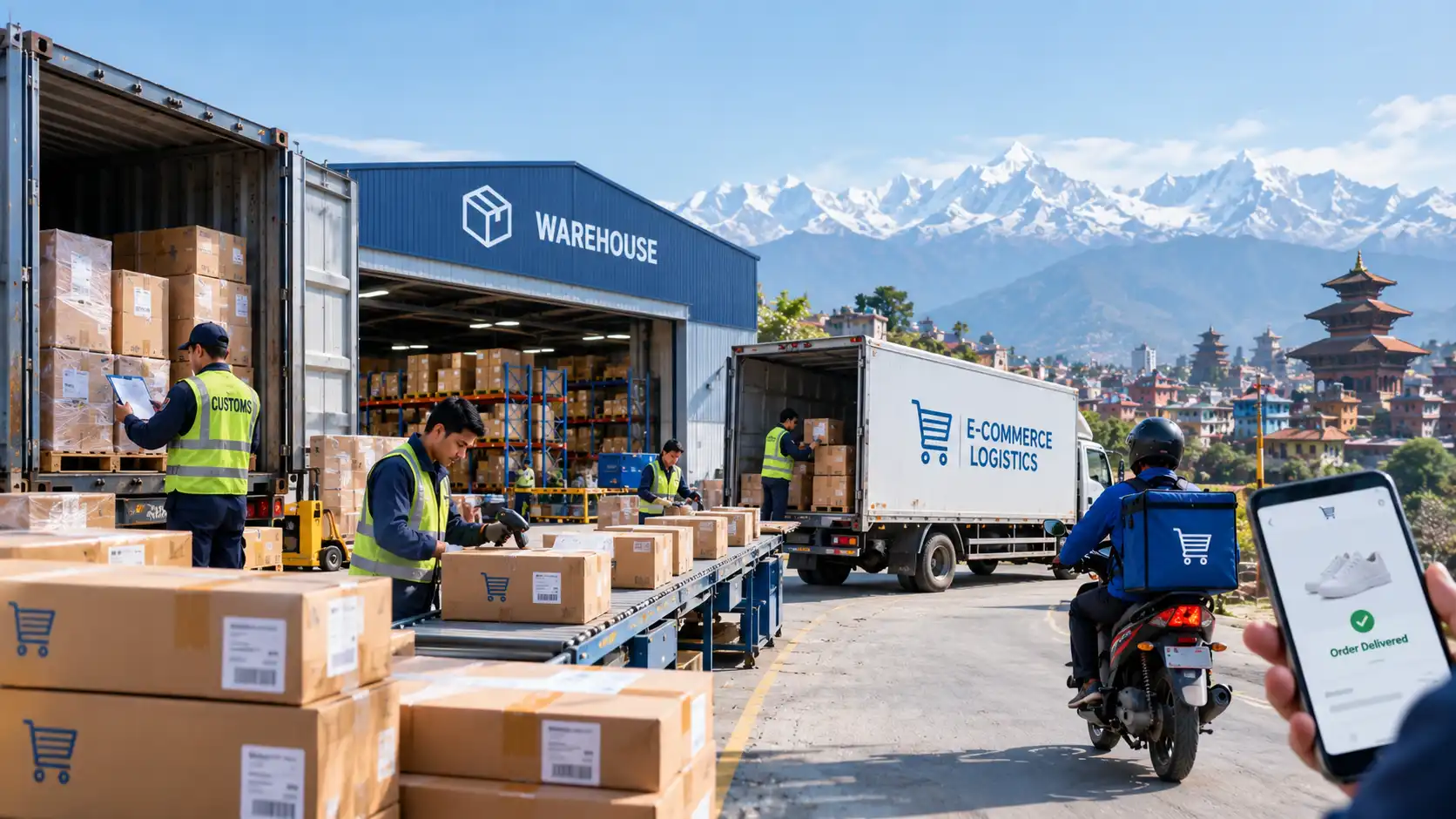
Ecommerce logistics in Nepal looks nothing like it did five years ago, and it is still changing fast. Nepal’s online retail market generated close to 889 million US dollars in 2024. Growth landed somewhere between 20 and 25 percent that year alone. Electronics leads the category at roughly a quarter of total revenue. Fashion, hobby and leisure goods, and homeware follow close behind.
Here is the problem nobody warns you about when that growth happens this fast. The platforms, the sellers, and the customer demand have all sprinted ahead of Nepal’s physical infrastructure. You can build a beautiful online store in an afternoon. You cannot build a reliable delivery network to a district outside Kathmandu that fast. That gap is exactly where most ecommerce businesses in Nepal actually lose money.
If you run an online store, manage inventory for a marketplace seller, or import goods for resale in Nepal, you already feel this tension in practice. Getting it from a supplier, through customs, into a warehouse, and onto a customer’s doorstep in one piece is where the real business happens. Timing matters just as much as condition.
What Counts as Ecommerce Logistics Cargo in Nepal
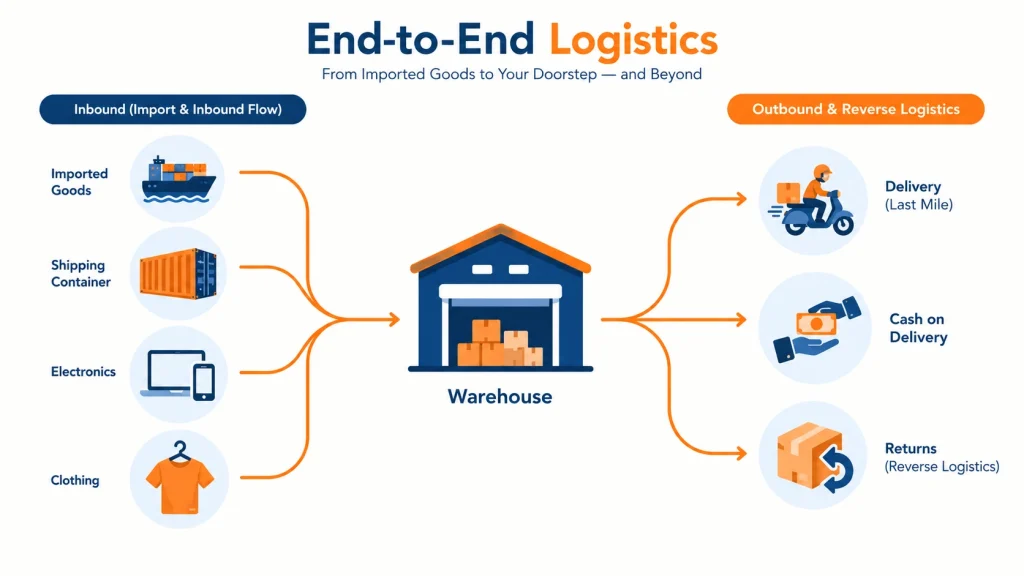
This category covers both the inbound and outbound sides of online retail.
Inbound cargo, mostly imported inventory:
- Electronics and mobile accessories, Nepal’s largest ecommerce category
- Fashion, apparel, and footwear
- Hobby, leisure, and lifestyle products
- Furniture and homeware
- Personal care and beauty products
- Bulk inventory sourced from China, India, and other manufacturing hubs
Outbound cargo, domestic fulfillment and delivery:
- Warehouse-to-customer last-mile delivery across the Kathmandu Valley and beyond
- Cash-on-delivery order fulfillment
- Returns and reverse logistics
- Cross-border parcel delivery for platforms partnering with international marketplaces
The defining feature of ecommerce cargo is volume and unpredictability. A single container shipment might contain thousands of individual SKUs destined for hundreds of different customer addresses. Unlike a bulk industrial shipment, the failure point is not the big move. It is the last two kilometers to someone’s front door.
Why Ecommerce Logistics in Nepal Demands a Different Playbook
Moving one large shipment from a factory to a warehouse is like filling a swimming pool with a fire hose. Moving that same inventory out to a thousand individual customers is like filling a thousand small glasses with an eyedropper. Each one has to be filled in the right order, without spilling. Traditional freight forwarding solves the first problem. Ecommerce logistics has to solve both.
A Market Growing Faster Than Its Infrastructure
Nepal’s ecommerce sector is not a niche anymore. According to Nepal’s ecommerce market data from ECDB, the country’s ecommerce revenue reached roughly 889 million US dollars in 2024. Growth landed in the 20 to 25 percent range for that year, with electronics alone accounting for close to a quarter of total online sales. That kind of growth rate means demand is compounding faster than warehouses, delivery fleets, and courier networks can naturally scale. This is exactly why sellers who plan their logistics properly pull ahead of sellers who treat it as an afterthought.
Cross-Border Platforms Are Changing the Category
Nepal’s ecommerce landscape increasingly connects to international marketplaces rather than staying purely domestic. Daraz, part of the Alibaba group, has run its 11.11 sale event in Nepal since 2018. It has since become the country’s largest annual online shopping event. Flipkart has also partnered directly with Nepali platforms to give Indian marketplace sellers access to Nepali customers. What this means practically is simple. A growing share of ecommerce cargo entering Nepal is not a single business’s private import anymore. It is high volume, multi-seller, cross-border freight that needs customs handling built for scale.
Cash on Delivery Still Shapes the Supply Chain
Unlike many mature ecommerce markets, cash on delivery remains a dominant payment method for online orders in Nepal. That single fact changes everything about how ecommerce logistics has to work here. A COD order that gets returned at the doorstep is not just a failed delivery. It is a round trip the courier has to absorb. A common industry response has been building return-rate buffers directly into delivery margins. A logistics partner who does not plan around COD return rates is planning for a market that does not actually exist here.
The Real Bottlenecks in Nepal’s Ecommerce Supply Chain
These are the specific points where ecommerce shipments actually run into trouble in practice.
Last-Mile Delivery Outside the Kathmandu Valley
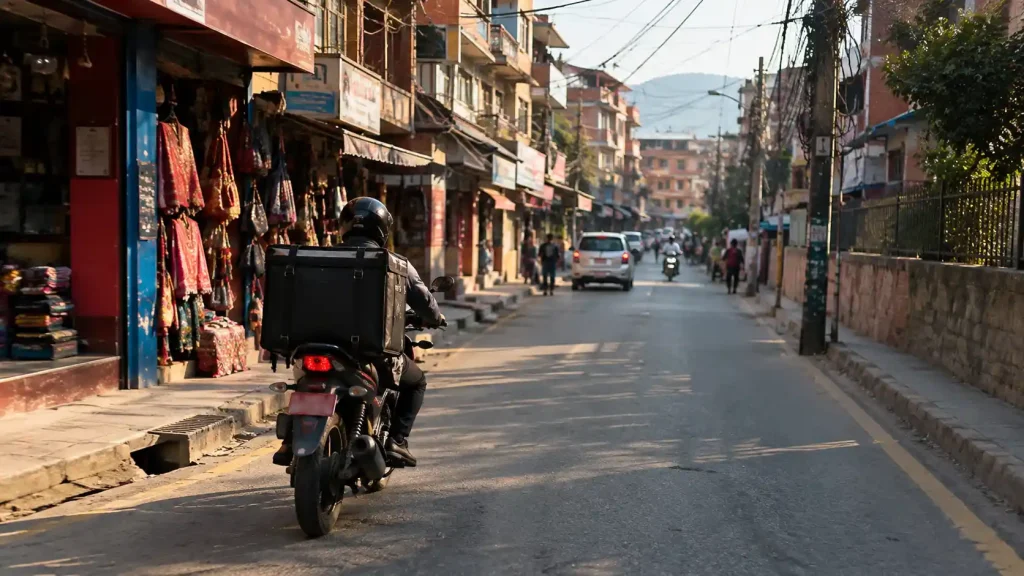
Same-day and next-day delivery expectations are realistic inside Kathmandu. Step outside the valley, and delivery timelines stretch fast. Courier density drops sharply, and road conditions become a real variable. A seller who promises the same delivery window nationwide is setting an expectation their logistics cannot consistently meet.
Cross-Border Customs for Imported Inventory
Bulk inventory sourced from China or India needs to clear customs before it ever reaches a warehouse shelf. High order volumes mean high shipment frequency. A customs process that is not built for that rhythm turns into a recurring bottleneck rather than a one-time hurdle.
Address and Location Ambiguity
Formal, standardized street addressing is still inconsistent across much of Nepal, particularly outside central Kathmandu. Couriers frequently rely on phone confirmation and landmark-based directions rather than a clean address lookup. This adds friction and failed-delivery risk that most global ecommerce logistics models were never designed to handle.
Fragmented Local Courier Networks
Nepal’s last-mile delivery market involves numerous small players rather than one or two dominant national couriers. That fragmentation can mean inconsistent service quality from one district to the next. A logistics partner who has only tested their network in Kathmandu may not actually have coverage where your customers live.
Returns and Reverse Logistics Costs
High COD return rates mean reverse logistics is not an edge case in Nepal’s ecommerce market. It is a built-in cost of doing business. A supply chain that only plans for the outbound leg is only solving half the actual problem.
How Brisk Forwarding Delivers Ecommerce Logistics in Nepal
Our approach treats ecommerce cargo as the high-volume, high-frequency category it actually is, not a smaller version of standard freight.
Air and Overland Freight for Inventory Imports
Air freight and overland transport built for the shipment frequency ecommerce sellers actually need, whether that is weekly restocks from Indian suppliers or larger consolidated shipments from China. See our air freight forwarding services for the full scope.
Customs Clearance for Ecommerce Shipments
Customs clearance and brokerage built around high-frequency, multi-SKU shipments, so recurring inventory imports do not turn into recurring delays. More detail is on our customs clearance and brokerage page.
Warehousing and Fulfillment Support
Warehousing near Kathmandu for sellers who need staging space between import clearance and last-mile dispatch, keeping inventory organized and ready to move rather than sitting idle. Details on our warehousing and distribution page.
Reliable Distribution Beyond the Valley
Overland transport planned around Nepal’s actual terrain, so inventory bound for district-level fulfillment partners has a realistic delivery timeline instead of a Kathmandu-based assumption applied nationwide. Covered under our land and overland transport services.
Who Uses Ecommerce Logistics in Nepal
This category serves a wide range of businesses across Nepal’s growing online retail sector.
- Online retailers and marketplace sellers importing electronics, fashion, and lifestyle goods
- D2C brands managing their own inventory and fulfillment
- Social media sellers running shops through Instagram and Facebook who need reliable bulk import support
- Cross-border resellers connected to platforms like Daraz and international marketplace partnerships
- Wholesale importers supplying inventory to multiple smaller online sellers
What to Look for in an Ecommerce Logistics Partner in Nepal
Ask these questions before committing to a forwarder for ecommerce cargo.
- Can they handle high-frequency, multi-SKU shipments without treating each one like a one-off project?
- Do they have actual delivery coverage outside the Kathmandu Valley, or only a claim of national coverage?
- How do they plan around cash-on-delivery return rates and reverse logistics costs?
- Can they name specific customs turnaround times for recurring inventory shipments, not just a best-case estimate?
- Do they have warehousing options that let you stage inventory close to your fulfillment operation?
A forwarder who cannot speak specifically to COD returns or last-mile coverage outside Kathmandu has likely only worked with sellers who stayed within the valley.
Frequently Asked Questions About Ecommerce Logistics in Nepal
How big is Nepal’s ecommerce market right now?
Nepal’s ecommerce revenue reached approximately 889 million US dollars in 2024, with year-over-year growth in the 20 to 25 percent range. Electronics is the largest product category, followed by hobby and leisure goods, fashion, and furniture and homeware.
Why does cash on delivery matter so much for ecommerce logistics in Nepal?
Cash on delivery remains a dominant payment method for online orders in Nepal. This means return rates and reverse logistics costs are a built-in part of the supply chain, not a rare exception. A logistics plan that ignores this will underestimate real delivery costs.
Can ecommerce sellers get reliable delivery outside Kathmandu?
Delivery outside the Kathmandu Valley is possible but generally slower and less consistent than delivery within it. Lower courier density and Nepal’s terrain are the main reasons why. Sellers who plan realistic delivery windows by region tend to perform better than those promising uniform nationwide timelines.
Do cross-border ecommerce shipments face different customs requirements?
Cross-border ecommerce cargo, especially bulk inventory from platforms and international marketplace partnerships, generally moves at higher frequency and volume than standard commercial imports. Customs processes need to be built for recurring shipments, not treated as isolated transactions.
Should an ecommerce business handle its own logistics or outsource it?
Most growing ecommerce businesses in Nepal outsource freight, customs, and warehousing to a dedicated logistics partner rather than building that capability in-house. The volume and complexity involved usually exceed what an internal team can manage while also running the actual retail business.
Ready to Get Started?
Contact our logistics specialists today for customized solutions, route information, and a quick quotation.