Pharma and Healthcare Logistics in Nepal: Where a Broken Cold Chain Costs More Than Money
Pharma and healthcare logistics in Nepal means safely moving medicines, vaccines, and medical equipment while maintaining the cold chain.
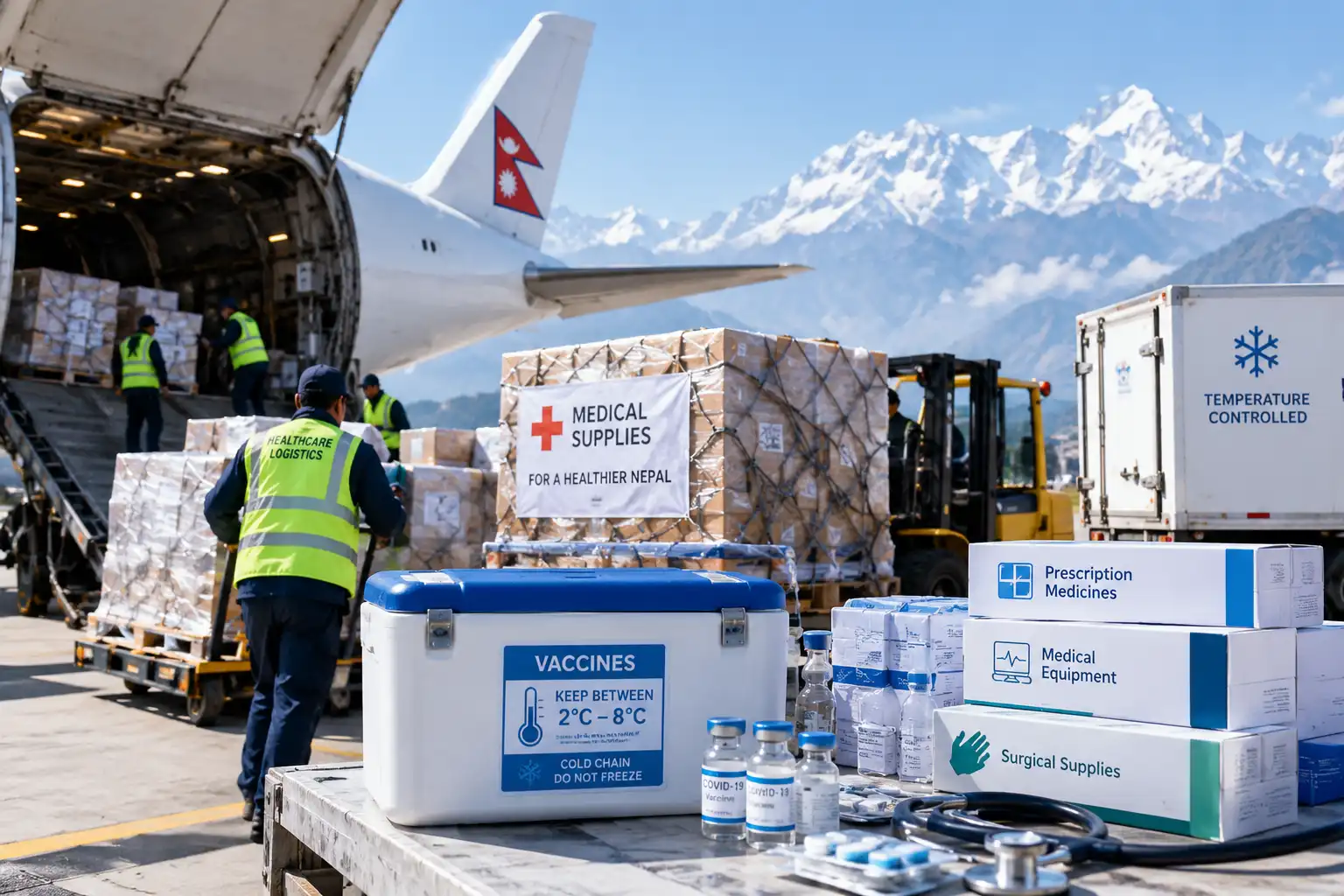
Pharma and healthcare logistics in Nepal carries a weight that most other freight categories do not. A late shipment of electronics is a business problem. A vaccine shipment that loses its cold chain for six hours is a batch that has to be destroyed. That is a hospital left without a medicine it was counting on.
Over half of the medicines Nepal consumes are imported, most of them from India. Nepal has 67 WHO GMP-certified domestic manufacturers supplying roughly half of national demand. That still leaves the other half, plus nearly all advanced medical equipment and specialty drugs, dependent on imports arriving correctly, on time, and within temperature range. If you distribute pharmaceuticals, run a hospital, or supply medical equipment in Nepal, you already know this. Close enough does not work in this category.
Think of it this way. Moving a container of furniture is like carrying a stack of books. Drop one, and you simply pick it back up. Moving a vaccine shipment is like carrying a lit candle across a windy courtyard. One gust at the wrong moment, and there is nothing left to salvage.
What Counts as Pharma and Healthcare Logistics Cargo in Nepal
This category spans a wide range of products, each with different handling requirements.
- Prescription medicines and over-the-counter pharmaceuticals
- Vaccines and biologics requiring strict cold chain control
- Medical devices and diagnostic equipment for hospitals and clinics
- Laboratory reagents and testing supplies
- Surgical instruments and consumables
- Personal protective equipment and hospital consumables
- Blood products and other temperature-critical biological materials
- Raw materials and active pharmaceutical ingredients used by Nepal’s domestic manufacturers
That last category matters more than people realize. Even Nepal’s own pharmaceutical industry depends heavily on imported raw materials. A shortage or delay in those inputs does not just affect one shipment. It slows production for every domestic manufacturer relying on that supply line, which ripples back into the country’s overall medicine availability.
The thread connecting all of these product types is risk. A delayed shipment of surgical gloves is inconvenient. A vaccine shipment that spends too long outside its required temperature range is unusable. There is no way to recover that loss once it happens.
Why Pharma and Healthcare Logistics in Nepal Demands Specialized Handling
Ask a general freight forwarder if they can move medical cargo, and most will say yes. Ask them how they maintain a two to eight degree cold chain from an Indian border crossing to a district hospital in the hills. You will find out quickly whether they have actually done it.
Nepal’s Heavy Reliance on Imported Medicine
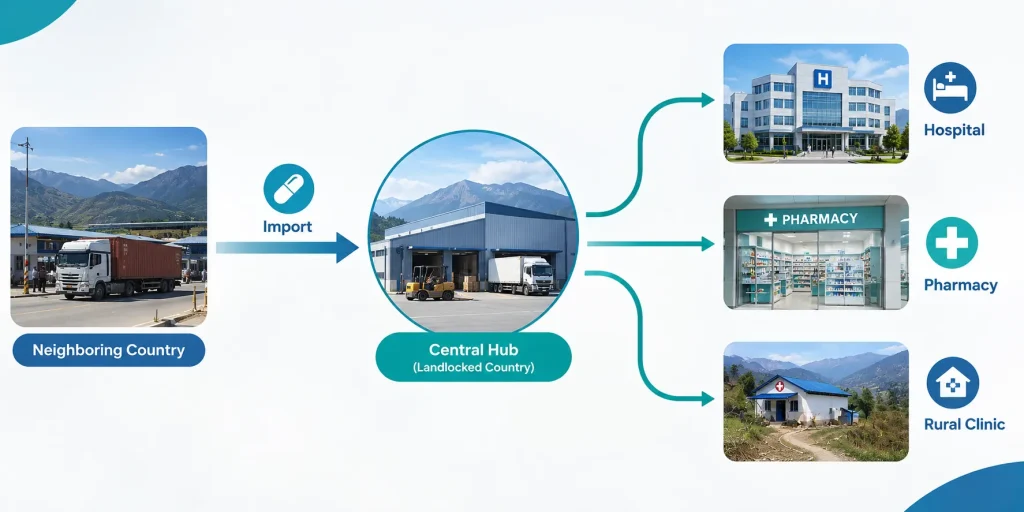
According to Nepal’s pharmaceutical industry data from the National Health Research Council, the country’s pharmaceutical market is valued at roughly 35 billion rupees annually. Domestic manufacturers supply close to half of that demand. The other half, more than 50 percent of medicines consumed in the country, comes from imports, primarily from India. Nepal’s medicinal and pharmaceutical product imports were valued at close to 298 million US dollars in 2024. That is up sharply from around 217 million dollars the year before. That is not a marginal trade flow. It is the backbone of the country’s medicine supply.
This import dependency means a customs delay at the border does not just slow down a shipment. It can directly affect medicine availability at pharmacies and hospitals waiting on that specific batch. Half of the country’s medicine relies on a supply chain crossing an international border. Every link in that chain carries real consequences for patients on the other end.
Raw Material Dependency Adds Another Layer
Nepal’s domestic pharmaceutical manufacturers face their own version of this same problem. Most active pharmaceutical ingredients used in local drug production are imported rather than sourced domestically. That means even medicines labeled as made in Nepal often depend on a functioning international supply chain somewhere upstream. A disruption at that raw material stage can eventually show up as a shortage of finished, locally produced medicine months later.
Cold Chain Requirements for Vaccines and Biologics
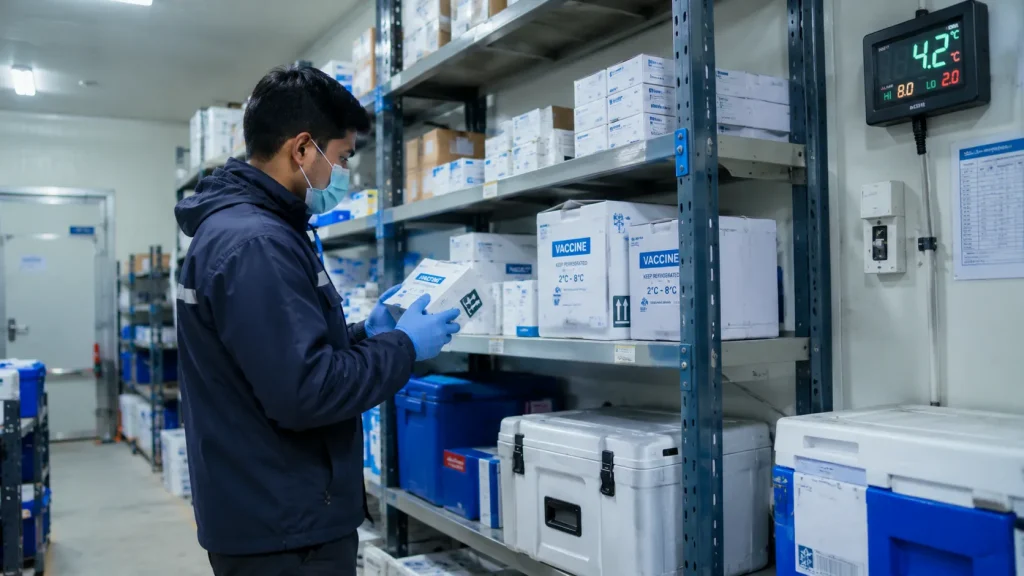
Vaccines, insulin, and many biologic drugs need continuous temperature control. This runs from the moment they leave the manufacturer until they reach the patient. Most require storage between two and eight degrees Celsius, with some biologics needing even stricter frozen conditions. Nepal’s cold chain infrastructure is strongest in Kathmandu. It thins out fast once you move into district towns and rural health posts. Every gap in that chain puts the product at risk. That gap might be a delayed customs clearance, a truck without working refrigeration, or a warehouse without backup power during an outage.
Regulatory Compliance for Drug Imports
Every pharmaceutical import into Nepal has to clear registration and compliance requirements set by the Department of Drug Administration. Missing documentation, an unregistered drug formulation, or incomplete batch certificates are common reasons a shipment gets held. Without them, customs will not release it on schedule. A commercial goods shipment with a documentation gap might mean a fine or a delay. A held pharmaceutical shipment can mean an out-of-stock medicine at pharmacies relying on it.
The Real Bottlenecks in Pharma and Healthcare Logistics in Nepal
These are the specific points where pharmaceutical and medical shipments actually run into trouble.
Drug Registration and Customs Documentation
A pharmaceutical product generally needs to be registered with Nepal’s drug regulatory authority before it can be imported and sold. A forwarder who does not check registration status in advance can walk a shipment straight into a customs hold. That hold can last for weeks while the issue gets resolved.
Cold Chain Gaps Outside Kathmandu
Refrigerated trucks and cold storage facilities concentrate around the Kathmandu Valley. Once a shipment needs to reach a hospital in a mid-hill district, the cold chain depends on far thinner infrastructure. A single weak link, one unrefrigerated leg of the journey, undoes everything upstream that was done correctly.
Airport and Border Capacity for Time-Sensitive Shipments
Vaccines and urgent medical equipment often move by air through Tribhuvan International Airport. During high-traffic periods, ground handling and customs processing can slow down exactly when a shipment cannot afford to wait. There is no way to expedite a cold chain shipment once it is already sitting in a queue.
Last-Mile Delivery to Rural Health Facilities
Nepal’s mountainous terrain affects medical cargo the same way it affects every other category. The difference is that medical cargo has far less margin for delay. A shipment can clear customs and reach Kathmandu without issue. It can then face days of delay reaching a rural health post because the final road is seasonal or damaged by monsoon landslides.
Documentation for Specialized Equipment
Medical devices and diagnostic equipment often require import permits or technical certification beyond standard customs paperwork. Treating this like a generic equipment shipment is a common and costly mistake. It stalls delivery right when a hospital is waiting on new diagnostic capability.
Power Reliability for Cold Storage
Nepal has made significant progress on power infrastructure, but outages still occur, particularly outside major cities. A warehouse or health facility without reliable backup power puts any temperature-sensitive stock at risk the moment the grid goes down. Most general logistics providers never think to ask about this variable.
Coordinating Multiple Stakeholders
A single vaccine shipment can involve a manufacturer, a freight forwarder, customs officials, a health ministry program, and a local health facility. All of them need to coordinate timing. A breakdown in communication between any two of these parties can create delays. Those delays often have nothing to do with the physical movement of the cargo itself.
How Brisk Forwarding Delivers Pharma and Healthcare Logistics in Nepal
Our process is built around the specific risks above, not a generic cargo checklist.
Air Freight for Time-Critical Shipments
Air freight coordination for vaccines, urgent medical equipment, and time-sensitive pharmaceutical shipments landing at Tribhuvan International Airport, with slot planning that accounts for the airport’s peak-traffic congestion. See our air freight forwarding services for the full scope.
Customs Clearance and Regulatory Documentation
Customs clearance and brokerage with direct experience in drug registration status and Department of Drug Administration requirements, so paperwork is verified before cargo ships, not discovered as a problem after it arrives at the border. More detail is on our customs clearance and brokerage page.
Cold Chain and Temperature-Controlled Warehousing
Warehousing near Kathmandu with the temperature control that vaccines, biologics, and other sensitive pharmaceutical products need while awaiting distribution, backed by contingency planning for power interruptions. Details on our warehousing and distribution page.
Overland and Last-Mile Delivery
Overland transport built around Nepal’s actual terrain and seasonal road conditions, so a shipment bound for a district hospital has a realistic delivery plan from the start rather than an optimistic best-case estimate. Covered under our land and overland transport services.
Coordination Across Every Stakeholder
We manage communication between manufacturers, customs officials, and receiving health facilities. A shipment’s timeline stays visible to everyone who needs it, not just the parties directly handling the cargo.
Who Uses Pharma and Healthcare Logistics in Nepal
This category serves a wide range of organizations across Nepal’s health sector, each with slightly different priorities.
- Pharmaceutical importers and distributors supplying pharmacies nationwide, who need predictable customs timelines to manage inventory across their distribution network
- Hospitals and private clinics sourcing both medicines and diagnostic or surgical equipment, where a delayed shipment can directly affect patient care schedules
- Diagnostic laboratories importing reagents and testing supplies, many of which have strict expiry windows tied to temperature exposure
- Medical device and equipment suppliers managing complex import permits for imaging, surgical, and monitoring equipment
- NGOs and INGOs running health programs that depend on reliable medical supply chains, often into remote districts with limited existing infrastructure
- Vaccine programs, whether government-run immunization campaigns or private clinic supply, requiring strict cold chain compliance from arrival to administration
- Domestic pharmaceutical manufacturers importing raw materials and active pharmaceutical ingredients needed to keep local production running
What to Look for in a Pharma and Healthcare Logistics Partner in Nepal
Ask these questions before trusting a forwarder with medical or pharmaceutical cargo.
- Do they check drug registration status with Nepal’s regulatory authority before a shipment ships, or after it gets held at customs?
- Can they document an unbroken cold chain from origin to final delivery, not just from origin to Kathmandu?
- Do they have experience with the specific import permits medical devices and diagnostic equipment require?
- What is their actual delivery plan for reaching health facilities outside the Kathmandu Valley?
- How do they handle a temperature excursion if one occurs mid-shipment, and will they tell you if it happens?
- Do they have contingency plans for power outages affecting cold storage during transit or warehousing?
A forwarder who cannot answer the cold chain and last-mile questions specifically has probably never actually delivered to a rural health facility.
Frequently Asked Questions About Pharma and Healthcare Logistics in Nepal
How Much Does Pharma and Healthcare Logistics in Nepal Rely on Imports?
Domestic manufacturers supply roughly half of Nepal’s pharmaceutical demand, with the remaining share, more than half of medicines consumed in the country, imported primarily from India. This makes import logistics a critical part of Nepal’s overall medicine availability.
What happens if a vaccine shipment loses its cold chain?
A vaccine or biologic that exceeds its required temperature range for too long is generally considered compromised and unusable. This is why continuous temperature monitoring and a verified cold chain matter more for this category than almost any other type of cargo.
Does medical equipment need special import permits in Nepal?
Many medical devices and diagnostic equipment require specific import documentation beyond standard customs clearance. Requirements vary by equipment type, so confirming this before shipping avoids delays at the border.
Why do Nepal’s own pharmaceutical manufacturers still depend on imports?
Most domestic manufacturers rely on imported active pharmaceutical ingredients and raw materials, since Nepal’s local supply of these inputs remains limited. That means even locally produced medicine depends on international supply chains functioning smoothly.
Can One Partner Handle All of Pharma and Healthcare Logistics in Nepal?
Yes, and using one experienced partner for both categories means they can manage registration checks, cold chain requirements, and last-mile delivery together rather than treating each shipment type as a separate, unrelated problem.
How does Nepal’s terrain specifically affect medical supply chains?
Mountainous terrain and seasonal road conditions can turn a short-distance delivery into a multi-day journey once cargo leaves Kathmandu. For temperature-sensitive shipments, that extended timeline directly threatens product viability, unlike non-perishable cargo, which can simply wait out a delay.
Ready to Get Started?
Contact our logistics specialists today for customized solutions, route information, and a quick quotation.