Food and Beverage Logistics in Nepal: Moving What Nepal Grows, Drinks, and Eats
Food and beverage logistics in Nepal covers both exports and imports, requiring reliable customs clearance, specialized handling, cold chain support, and efficient transportation across challenging terrain.
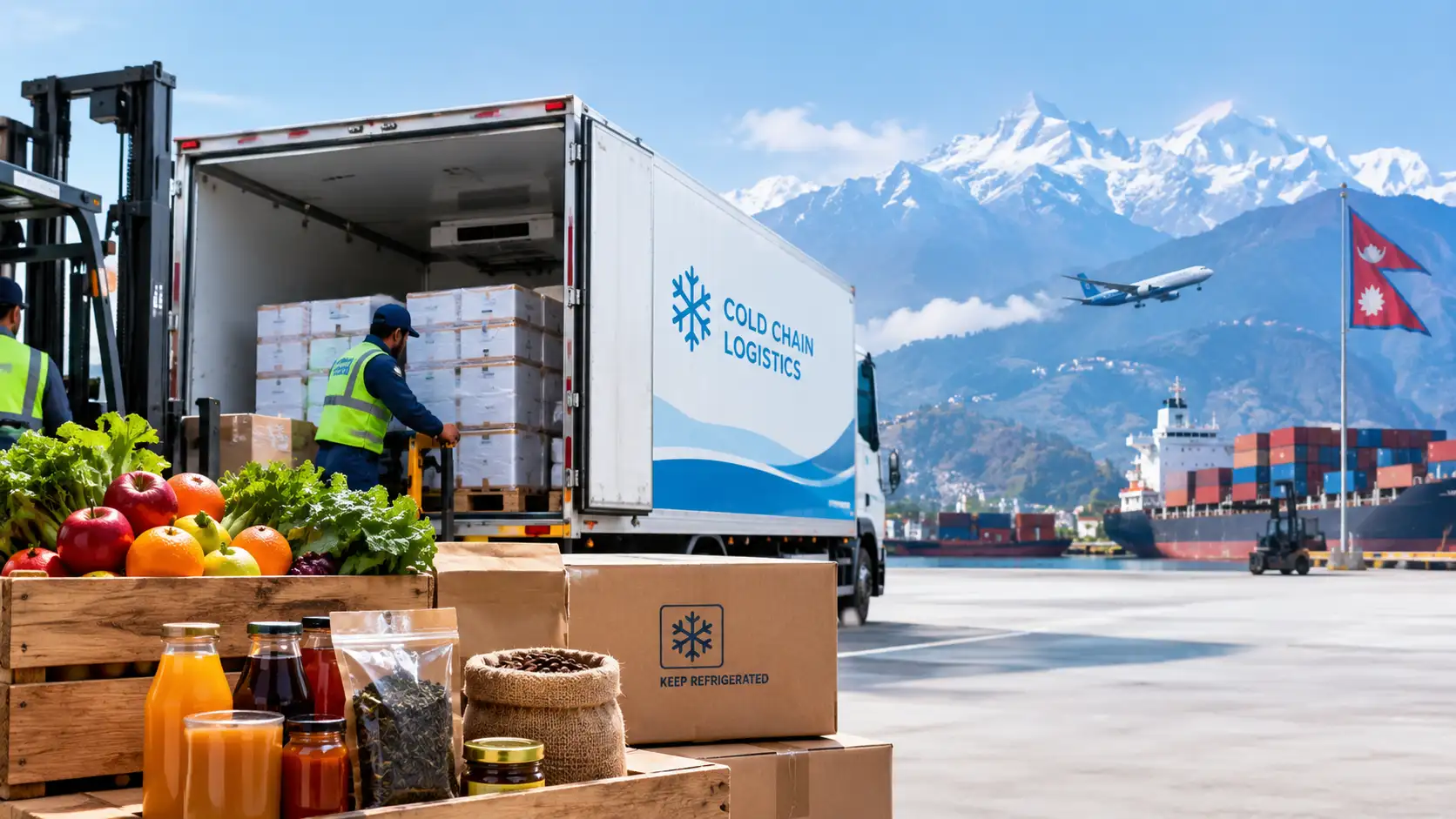
Food and beverage logistics in Nepal runs in two directions at once, and most forwarders only understand one of them well. Going out, Nepal ships cardamom, tea, ginger, and processed spices to India and beyond. Coming in, Nepal depends on imports for packaged snacks, dairy, edible oils, soft drinks, alcohol, and consumer goods that a landlocked, mountainous country cannot produce enough of on its own.
Food and beverage logistics in Nepal is not one supply chain. It is several, layered on top of each other, each with its own certification rules, shelf-life pressure, and border requirements. If you grow, import, distribute, or supply food and beverage products anywhere in this country, understanding both directions of that trade matters. It is what separates a forwarder who happens to move your cargo from one who actually protects it.
What Counts as Food and Beverage Logistics Cargo in Nepal
This category splits into exports and imports, and each behaves differently.
Export cargo, mostly agricultural:
- Large cardamom, ginger, and other spice crops from the eastern hill districts
- Orthodox and CTC tea
- Processed herbal and spice products
- Niche exports like honey, essential oils, and specialty foods aimed at diaspora and export markets
Import cargo, largely for domestic consumption:
- Packaged snacks, confectionery, and biscuits
- Dairy products, edible oils, and cooking fats
- Soft drinks, energy drinks, and bottled water
- Beer, wine, and spirits
- Bulk grains and food commodities
- Canned and preserved foods used heavily by hotels and restaurants
Nepal’s food import demand has grown alongside urban incomes and a fast-expanding hospitality sector. Hotels and restaurants in tourist hubs import specialty items like cheese, canned goods, and packaged sauces directly. Everyday consumer goods like soft drinks and biscuits move through a wider retail distribution network. On the regulatory side, imported food and beverage products fall under the Department of Food Technology and Quality Control. This body oversees compliance and labeling standards before goods can reach store shelves.
Why Food and Beverage Logistics in Nepal Demands Category-Specific Handling
A cardamom shipment and a container of imported energy drinks have almost nothing in common logistically, and that is exactly the point. Treating food and beverage cargo as one generic category is where most delays and quality losses start.
Food and Beverage Logistics in Nepal: The Export Side
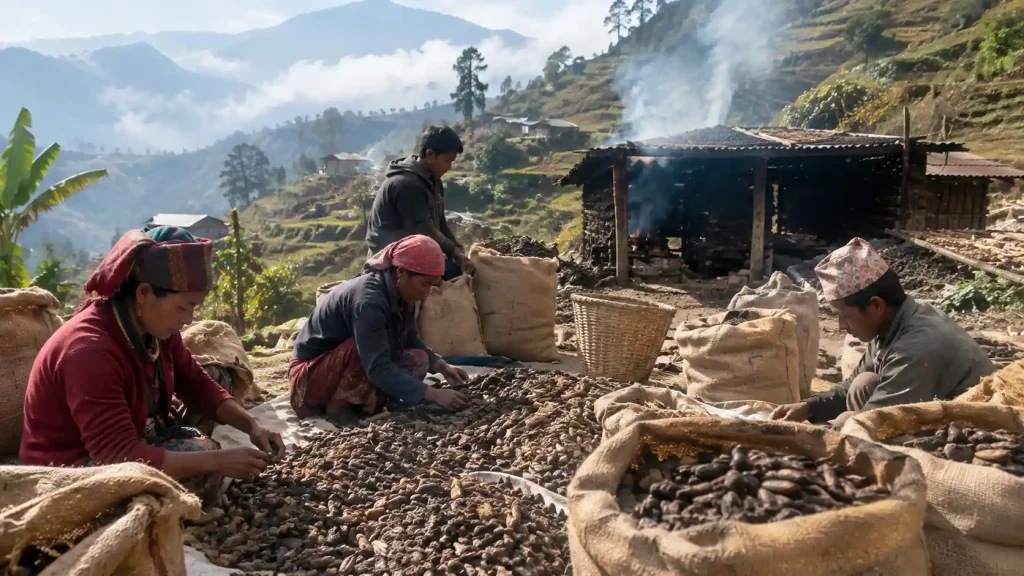
Nepal’s cardamom and tea exports concentrate around defined harvest windows. According to Nepal’s cardamom export data from the Trade and Export Promotion Centre, tthe country ranked among the top four cardamom exporters globally in recent years. Export value nearly tripled over the past decade. Roughly 98 percent of that volume moves through India-bound border crossings like Kakadbhitta before reaching Pakistan and Gulf markets.
Food and Beverage Logistics in Nepal: The Import Side
Imported food and beverage products face a different set of pressures. Every shipment needs to clear food safety and labeling compliance before distribution, and unlike raw agricultural exports, most imported products carry printed expiry dates. A shipment held at customs for a week is not just delayed, it is actively losing shelf life every day it sits there. This is especially true for dairy, bakery imports, and anything temperature-sensitive.
The Shared Problem: Terrain and a Single Land Border
Both directions of trade depend on the same overland corridor. Nepal is landlocked, so nearly everything entering or leaving the country by sea route passes through Indian ports and crosses a land border. That single-corridor dependency means congestion or delay at one crossing point affects cardamom exporters and soft drink importers alike, regardless of which direction their cargo is moving.
The Real Bottlenecks in Food and Beverage Logistics in Nepal
These are the specific points where food and beverage shipments actually get held up in practice.
Border Customs Capacity During Harvest Season
Export volume for cardamom and tea spikes during harvest months, and that pressure hits the same border infrastructure that import shipments rely on year-round. Anyone shipping during October through December should plan for slower clearance, regardless of what they are moving.
Food Safety and Labeling Compliance for Imports
Every packaged food or beverage import needs correct labeling and documentation to satisfy the Department of Food Technology and Quality Control before it can move past customs. Missing paperwork is one of the most common reasons an import shipment gets held rather than released.
Cold Chain Gaps Outside Major Towns
Refrigerated transport and storage capacity concentrates in Kathmandu and a few larger cities. Move outside that zone, whether toward the eastern hill districts where cardamom and tea originate or toward smaller towns receiving dairy and frozen imports, and cold chain infrastructure thins out fast.
Alcohol and Excise Regulations
Beer, wine, and spirits carry additional excise and licensing requirements on top of standard food import rules. Getting this wrong does not just delay a shipment, it can trigger penalties that a standard food import would never face.
Terrain Between Origin and Border or Warehouse
Whether it is cardamom moving from a hill farm to a border crossing, or an imported dairy shipment moving from Kathmandu to a district town, the final leg is rarely easy. Nepal’s mountainous terrain and seasonal road conditions affect nearly every food and beverage shipment in the country.
How Brisk Forwarding Delivers Food and Beverage Logistics in Nepal
Our process treats export and import food cargo as the distinct categories they are, not as one generic freight type.
Customs Clearance and Brokerage
Customs clearance and brokerage covering both export documentation, including phytosanitary certificates for agricultural products, and import compliance for packaged food, beverages, dairy, and alcohol. More detail is on our customs clearance and brokerage page.
Overland Transport to Border Points and Distribution Hubs
Reliable overland transport for both export cargo heading to border crossings and import cargo moving from Kathmandu to distribution points nationwide. Covered under our land and overland transport services.
Air Freight for Time-Sensitive Shipments
Air freight coordination for high-value or time-sensitive cargo, whether that is a specialty food import with a tight shelf life or an export shipment that cannot wait for the next available ground transport slot. See our air freight forwarding services for the full scope.
Warehousing Near Kathmandu
Warehousing near Kathmandu for import cargo awaiting distribution or export cargo consolidating before the final border run, with the storage conditions food and beverage products actually need. Details on our warehousing and distribution page.
Who Uses Food and Beverage Logistics in Nepal
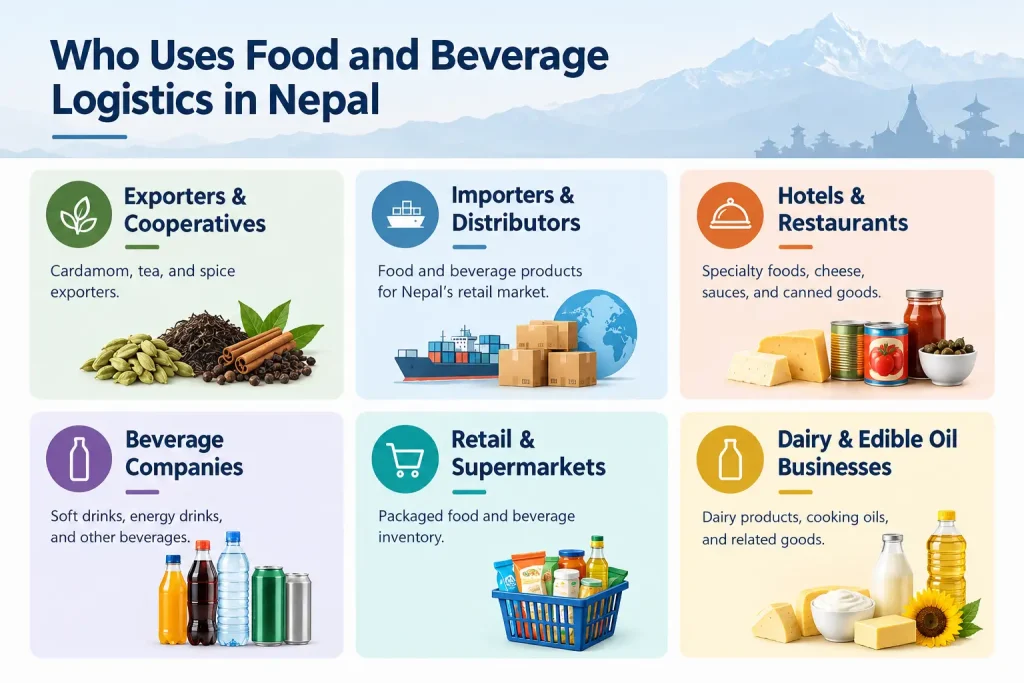
This category serves a wide range of businesses on both sides of the trade.
- Cardamom, tea, and spice cooperatives and export traders in the eastern hill districts
- Food and beverage importers and distributors supplying Nepal’s retail sector
- Hotels and restaurants sourcing specialty imports like cheese, canned goods, and packaged sauces
- Beverage companies importing soft drinks, alcohol, and energy drinks for domestic distribution
- Retail chains and supermarkets managing packaged food inventory across multiple locations
- Dairy and edible oil importers supplying wholesale and retail markets
What to Look for in a Food and Beverage Logistics Partner in Nepal
Ask these questions before choosing a forwarder, and notice whether the answers are specific to your product type.
- Do they handle both export and import food cargo, or only one direction of the trade?
- Can they name the food safety and labeling requirements for your specific import category without researching it after your shipment lands?
- Do they understand excise and licensing rules if you import alcohol or beverages?
- Do they have refrigerated or climate-controlled options for temperature-sensitive cargo, both agricultural and packaged?
- How do they plan around harvest season congestion if your business also exports?
A forwarder who treats every answer as “yes, we handle food” without specifics probably has not moved your particular product category before.
Frequently Asked Questions About Food and Beverage Logistics in Nepal
Does Food and Beverage Logistics in Nepal Favor Imports or Exports?
Nepal exports high-value agricultural products like cardamom and tea while importing a wide range of packaged food, beverages, dairy, and edible oils for domestic consumption. Both directions represent significant, ongoing trade volume rather than one being a minor category.
What documentation does an imported beverage shipment need?
Beyond standard customs paperwork, beverage imports need to meet Department of Food Technology and Quality Control labeling requirements. Alcoholic beverages also carry additional excise and licensing rules specific to that category.
How does harvest season affect import shipments, not just exports?
Export volume spikes during cardamom and tea harvest months put pressure on the same border customs infrastructure that import shipments depend on. An import shipment crossing during peak export season can face slower processing even though it has nothing to do with the harvest itself.
Can One Forwarder Handle All of Food and Beverage Logistics in Nepal?
Yes, and using one partner for both sides of your trade lets them plan capacity and timing across your full shipping calendar. That beats treating your export and import shipments as unrelated jobs competing for the same resources.
Ready to Get Started?
Contact our logistics specialists today for customized solutions, route information, and a quick quotation.