Air Freight vs Ocean Freight: Choosing the Optimal Route for Cargo
Choosing the right transportation method is an important part of international logistics. Businesses moving goods between countries often need to decide whether air freight or ocean freight is more suitable...
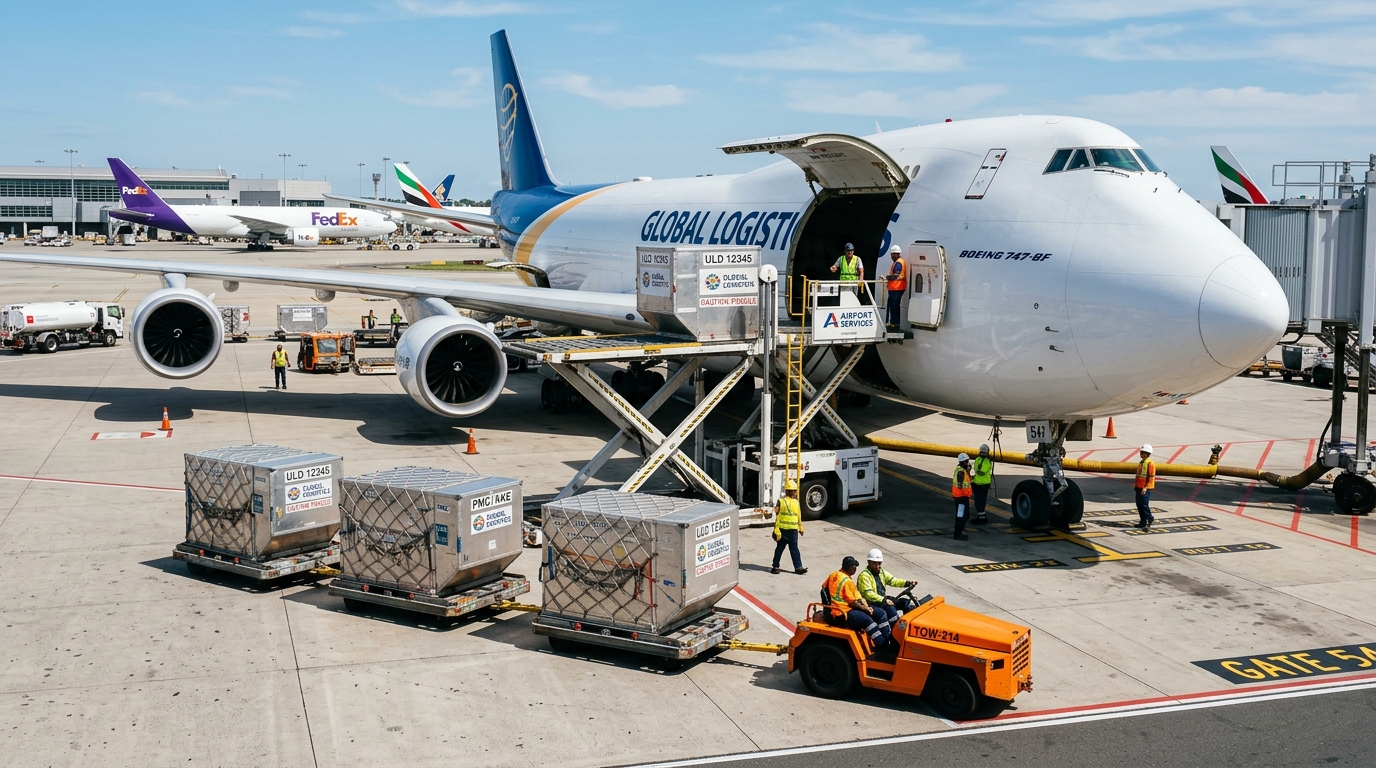
Choosing the right transportation method is an important part of international logistics. Businesses moving goods between countries often need to decide whether air freight or ocean freight is more suitable for their cargo.
Air freight is generally associated with faster transportation, while ocean freight is commonly used for larger shipments and can provide a more economical option for certain types of cargo.
However, the right choice depends on more than just speed or price. Cargo type, shipment size, destination, delivery requirements, budget, and handling requirements all need to be considered before selecting a transportation method.
Brisk Forwarding helps businesses manage international freight requirements, including air freight and ocean freight services. Our team can assist with freight planning, documentation, customs clearance, cargo handling, and delivery arrangements.
What Is Air Freight?
Air freight is the transportation of goods by aircraft.
It is commonly used when businesses need to move cargo internationally within a shorter timeframe. Air freight can be suitable for urgent shipments, valuable products, commercial samples, spare parts, smaller consignments, and eligible perishable goods.
The air freight process may include:
- Cargo pickup
- Packaging and preparation
- Freight booking
- Airline coordination
- Documentation
- Customs clearance
- Airport handling
- Air transportation
- Destination customs clearance
- Final delivery
A freight forwarder can coordinate these different stages and communicate with airlines, customs authorities, transport companies, and other logistics partners.
What Is Ocean Freight?
Ocean freight is the transportation of goods by ship.
It is widely used for international trade and is particularly suitable for large or heavy shipments. Businesses can transport cargo in shipping containers or through other ocean freight arrangements depending on the type and quantity of goods.
Ocean freight may be suitable for:
- Large shipments
- Bulk commercial cargo
- Heavy machinery
- Industrial equipment
- Retail inventory
- Furniture
- Raw materials
- Containerized goods
The ocean freight process can include cargo pickup, export documentation, container booking, port handling, customs clearance, ocean transportation, destination clearance, and final delivery.
Air Freight vs Ocean Freight: Key Differences
Air and ocean freight serve different logistics requirements.
The main differences include:
| Factor | Air Freight | Ocean Freight |
|---|---|---|
| Transit Time | Generally faster | Generally slower |
| Shipment Size | Suitable for small to medium shipments | Suitable for large shipments |
| Cost | Usually higher | Often more economical for larger cargo |
| Weight | Suitable for many types of cargo within airline limits | Suitable for heavy cargo |
| Urgent Cargo | Suitable | Less suitable for urgent shipments |
| Large Inventory | May be expensive | Often more practical |
| Perishable Cargo | Suitable for eligible goods | Suitable for certain products with appropriate handling |
| Packaging | Requires suitable air transport packaging | Requires suitable sea transport packaging |
| Tracking | Available through freight providers | Available through freight providers |
These are general differences. Actual costs, transit times, and suitability depend on the shipment, route, carrier, cargo type, and service selected.
When Should You Choose Air Freight?
Air freight may be appropriate when delivery time is an important consideration.
1. You Need Faster Delivery
Air transportation generally provides shorter transit times than ocean transportation.
This can be useful when customers are waiting for products or when delays could affect business operations.
2. Your Cargo Is Time-Sensitive
Some shipments need to arrive quickly.
Examples include:
- Urgent spare parts
- Commercial samples
- Replacement equipment
- Seasonal products
- Time-sensitive business goods
Air freight can help reduce transportation time when suitable flight options are available.
3. You Have a Smaller Shipment
Air freight can be useful for smaller consignments that do not require a full shipping container.
For businesses importing samples, products, spare parts, or limited inventory, air transportation can be a practical option.
4. Your Cargo Has High Value
Some high-value goods may benefit from faster transportation.
Examples can include:
- Electronics
- Commercial equipment
- Specialized components
- High-value samples
- Certain industrial parts
The suitability of air transportation still depends on airline rules and cargo requirements.
5. Your Goods Have a Short Shelf Life
Some eligible perishable products can benefit from faster transportation.
Food products, agricultural goods, flowers, and other time-sensitive products may require specialized packaging and handling.
When Should You Choose Ocean Freight?
Ocean freight can be a practical option for larger shipments where delivery speed is less critical.
1. You Have Large Volumes of Cargo
Businesses importing or exporting large quantities of goods may find containerized ocean freight more practical.
Containers can accommodate substantial quantities of commercial cargo.
2. Your Cargo Is Heavy or Bulky
Ocean transportation is commonly used for heavy machinery, equipment, raw materials, furniture, and other large shipments.
The available container type and shipping arrangement depend on the cargo’s dimensions and characteristics.
3. You Want to Manage Transportation Costs
Ocean freight can be more economical than air freight for many large shipments.
For businesses that can plan inventory in advance and do not require rapid delivery, ocean transportation may provide a suitable balance between cargo volume and transportation cost.
4. You Are Importing Large Inventories
Businesses that regularly import products may use ocean freight to replenish inventory.
For example, retailers and distributors may ship larger quantities by container rather than repeatedly sending smaller shipments by air.
5. Your Cargo Is Not Time-Sensitive
If your goods do not need to arrive quickly, ocean freight can provide a practical transportation option.
Businesses can plan their purchasing and inventory schedules around the expected shipping and delivery timeline.
Air Freight vs Ocean Freight Cost
Cost is one of the biggest factors when choosing between air and ocean freight.
Air freight is generally more expensive per unit of weight or volume, while ocean freight can be more economical for larger shipments.
However, the total logistics cost depends on several factors.
These may include:
- Origin
- Destination
- Cargo weight
- Cargo dimensions
- Shipping volume
- Carrier
- Freight route
- Fuel-related charges
- Port or airport charges
- Customs clearance
- Documentation
- Warehousing
- Delivery location
- Cargo handling
For this reason, businesses should compare the total landed logistics cost rather than looking only at the basic freight rate.
Understanding Chargeable Weight in Air Freight
Air freight pricing can depend on chargeable weight.
Chargeable weight may be based on either the actual weight or the volumetric weight, depending on which produces the applicable higher charge.
What Is Actual Weight?
Actual weight is the physical weight of the cargo.
For example, if a shipment weighs 100 kg, its actual weight is 100 kg.
What Is Volumetric Weight?
Volumetric weight considers the amount of space a shipment occupies.
A large package can be relatively light but still occupy significant space inside an aircraft.
This is why airlines may use volumetric calculations when determining the applicable chargeable weight.
The exact calculation can depend on the carrier and service.
Understanding Container Shipping in Ocean Freight
Ocean freight commonly uses standardized shipping containers.
Common container types include:
- 20-foot containers
- 40-foot containers
- High-cube containers
- Refrigerated containers
- Open-top containers
- Flat-rack containers
The appropriate container depends on the cargo type, size, weight, and handling requirements.
FCL — Full Container Load
FCL means the shipment uses an entire container.
This can be suitable for businesses with enough cargo to fill a container or businesses that prefer dedicated container space.
LCL — Less Than Container Load
LCL allows smaller shipments to share container space with cargo from other businesses.
This can be useful when the shipment does not require a full container.
Air Freight vs Ocean Freight Transit Time
Transit time is another major difference.
Air freight generally provides faster transportation because aircraft travel at significantly higher speeds and do not require the same port-to-port ocean voyage.
Ocean freight usually takes longer because the shipment may involve:
- Export customs
- Inland transportation
- Port handling
- Vessel loading
- Ocean transit
- Destination port handling
- Import customs
- Inland transportation
Actual transit time depends on the route, carrier, schedule, port conditions, customs procedures, and other operational factors.
Which Is Better for Small Shipments?
For smaller shipments, air freight may provide a practical solution when speed is important.
However, LCL ocean freight can also be considered when the shipment is not urgent and the business wants to manage transportation costs.
The right choice depends on:
- Shipment weight
- Shipment volume
- Destination
- Delivery deadline
- Budget
- Cargo type
A freight forwarder can compare available options based on your shipment details.
Which Is Better for Heavy Cargo?
Heavy cargo may often be more suitable for ocean freight, particularly when the shipment is large or can be transported in a container.
Examples include:
- Industrial machinery
- Construction equipment
- Factory components
- Large quantities of raw materials
- Heavy commercial equipment
However, some urgent heavy or specialized cargo may still be transported by air if it meets airline weight, size, packaging, and handling requirements.
Air Freight vs Ocean Freight for Perishable Goods
Perishable cargo requires careful planning.
Air freight can be suitable for eligible products that need shorter transportation times.
Examples may include:
- Fresh agricultural products
- Flowers
- Certain food products
- Temperature-sensitive goods
- Other eligible perishables
Ocean freight can also be used for certain perishable products when appropriate temperature control, packaging, and handling arrangements are available.
The right transportation method depends on the product’s shelf life, temperature requirements, destination, and available logistics service.
Air Freight vs Ocean Freight for Nepal
For businesses in Nepal, the choice between air and ocean freight can involve additional transportation planning because Nepal is a landlocked country.
Ocean freight shipments destined for Nepal generally require transportation through an international seaport followed by inland transportation to Nepal.
Air freight, on the other hand, can provide direct air cargo transportation to Nepal’s international airport subject to available airline services and cargo requirements.
Businesses importing goods from countries such as India or China may also have road-based transportation options depending on the origin, destination, cargo, and available routes.
This means the most suitable solution should be evaluated based on the complete transportation route rather than only the international freight segment.
How to Choose Between Air and Ocean Freight
Before choosing a transportation method, consider the following factors.
1. Delivery Deadline
How quickly does your cargo need to arrive?
If the shipment is urgent, air freight may be worth considering.
If you have more flexibility, ocean freight may provide another option.
2. Cargo Volume
Large shipments can often be more practical to transport by ocean.
Smaller shipments may be suitable for air freight or LCL depending on the circumstances.
3. Cargo Weight and Dimensions
Heavy and oversized shipments require careful planning.
Provide accurate cargo dimensions and weight so the freight forwarder can determine suitable transportation options.
4. Transportation Budget
Compare the total cost of each option, including freight, handling, customs, and delivery.
5. Cargo Characteristics
Consider whether your goods are:
- Fragile
- Perishable
- High-value
- Hazardous
- Oversized
- Temperature-sensitive
- Time-sensitive
These characteristics can affect the available transportation options.
6. Destination
The destination and available transportation routes can significantly influence the choice.
Some destinations may have better air connections, while others may provide practical ocean freight options.
A Simple Example
Consider a Nepalese business importing products from China.
If the business needs a small quantity of products urgently for an upcoming customer order, air freight may be considered because delivery speed is important.
If the same business is importing a large quantity of inventory for the next three months, ocean freight combined with inland transportation may be considered because the business has more time and the shipment volume is larger.
The decision is therefore not simply about choosing air or ocean freight. It is about matching the transportation method with the business requirement.
Common Mistakes When Choosing Freight
Businesses can sometimes focus only on the initial freight price.
This can create problems later.
Choosing Only Based on Price
A lower freight rate may not always result in the lowest overall logistics cost.
Consider customs, handling, storage, delivery, and potential delays.
Ignoring Delivery Time
Saving transportation costs may not be worthwhile if delayed inventory affects your customers or business operations.
Providing Incorrect Cargo Information
Incorrect weight or dimensions can affect the freight quotation and transportation planning.
Not Considering Customs
International shipments require proper documentation and customs procedures.
Plan these requirements before dispatching your cargo.
Waiting Too Long to Plan
Last-minute shipping can reduce available transportation options and make it harder to meet delivery deadlines.
Early planning can give businesses more options.
How Brisk Forwarding Can Help
Choosing between air and ocean freight can be difficult when you are managing suppliers, customers, customs, transportation, and delivery at the same time.
Brisk Forwarding can help businesses coordinate their freight requirements.
Air Freight Services
We can assist with:
- Air freight booking
- Airline coordination
- Documentation
- Customs clearance
- Cargo handling
- Shipment coordination
- Final delivery
Ocean Freight Services
We can assist with:
- FCL shipments
- LCL shipments
- Ocean freight coordination
- Documentation
- Port handling coordination
- Customs clearance
- Inland transportation
- Final delivery
Route Planning
Our team can review your shipment details and help identify transportation options based on:
- Origin
- Destination
- Cargo type
- Weight
- Dimensions
- Volume
- Required delivery time
- Budget
Who Can Use Air or Ocean Freight Services?
Freight forwarding services can be useful for:
- Importers
- Exporters
- Manufacturers
- Trading companies
- E-commerce businesses
- Retailers
- Distributors
- Industrial companies
- Construction companies
- Machinery suppliers
- Agricultural businesses
- Businesses importing products from China
- Businesses trading with India
- Companies serving international customers
Whether you are shipping a small commercial package or managing regular containerized cargo, selecting the appropriate transportation method can help you manage your supply chain more effectively.
Get the Right Freight Solution for Your Cargo
Not sure whether air freight or ocean freight is suitable for your shipment?
Brisk Forwarding can help you review your cargo requirements and coordinate a suitable international freight solution.
Share your:
- Cargo type
- Weight
- Dimensions
- Quantity
- Origin
- Destination
- Required delivery date
with our team.
We can help you understand the available transportation options, documentation requirements, customs procedures, and delivery arrangements.
Contact Brisk Forwarding to discuss your shipment and request a freight quotation.
Frequently Asked Questions About Air Freight vs Ocean Freight
1. Is air freight faster than ocean freight?
Yes. Air freight is generally faster than ocean freight. However, the actual delivery time depends on the route, airline, flight schedule, customs clearance, cargo handling, and final delivery arrangements.
2. Is ocean freight cheaper than air freight?
Ocean freight can be more economical than air freight, particularly for larger shipments. The actual cost depends on cargo volume, weight, route, carrier, handling, customs, and delivery requirements.
3. Which is better for small shipments?
Air freight can be suitable for small shipments when faster delivery is important. LCL ocean freight can also be considered when the shipment is smaller and delivery time is more flexible.
4. Which is better for heavy cargo?
Ocean freight is commonly used for heavy and large shipments, particularly when container transportation is suitable. Some heavy cargo can also be transported by air depending on airline limitations and cargo requirements.
5. Can I ship perishable goods by air freight?
Yes. Certain perishable goods can be transported by air when they meet airline, customs, packaging, and handling requirements.
6. Can I ship large quantities by air freight?
Yes, but the cost may become significant as shipment weight and volume increase. For large quantities, ocean freight may provide another option depending on the delivery requirements.
7. What is FCL in ocean freight?
FCL stands for Full Container Load. It means a shipment uses an entire shipping container.
8. What is LCL in ocean freight?
LCL stands for Less Than Container Load. It allows smaller shipments to share container space with cargo from other shippers.
9. How is air freight charged?
Air freight charges can be based on chargeable weight, which may consider actual weight and volumetric weight. Other charges can also apply depending on the route and service.
10. How do I choose between air and ocean freight?
Consider your delivery deadline, cargo weight, volume, dimensions, cargo type, destination, and budget. A freight forwarder can review these details and help you compare available transportation options.
Ready to Get Started?
Contact our logistics specialists today for customized solutions, route information, and a quick quotation.